
Irrigation
Irrigation water reservoirs: what to assess before construction
Reservoir capacity must match water availability and the irrigation calendar. Learn what to gather before setting volume, geometry, and lining.
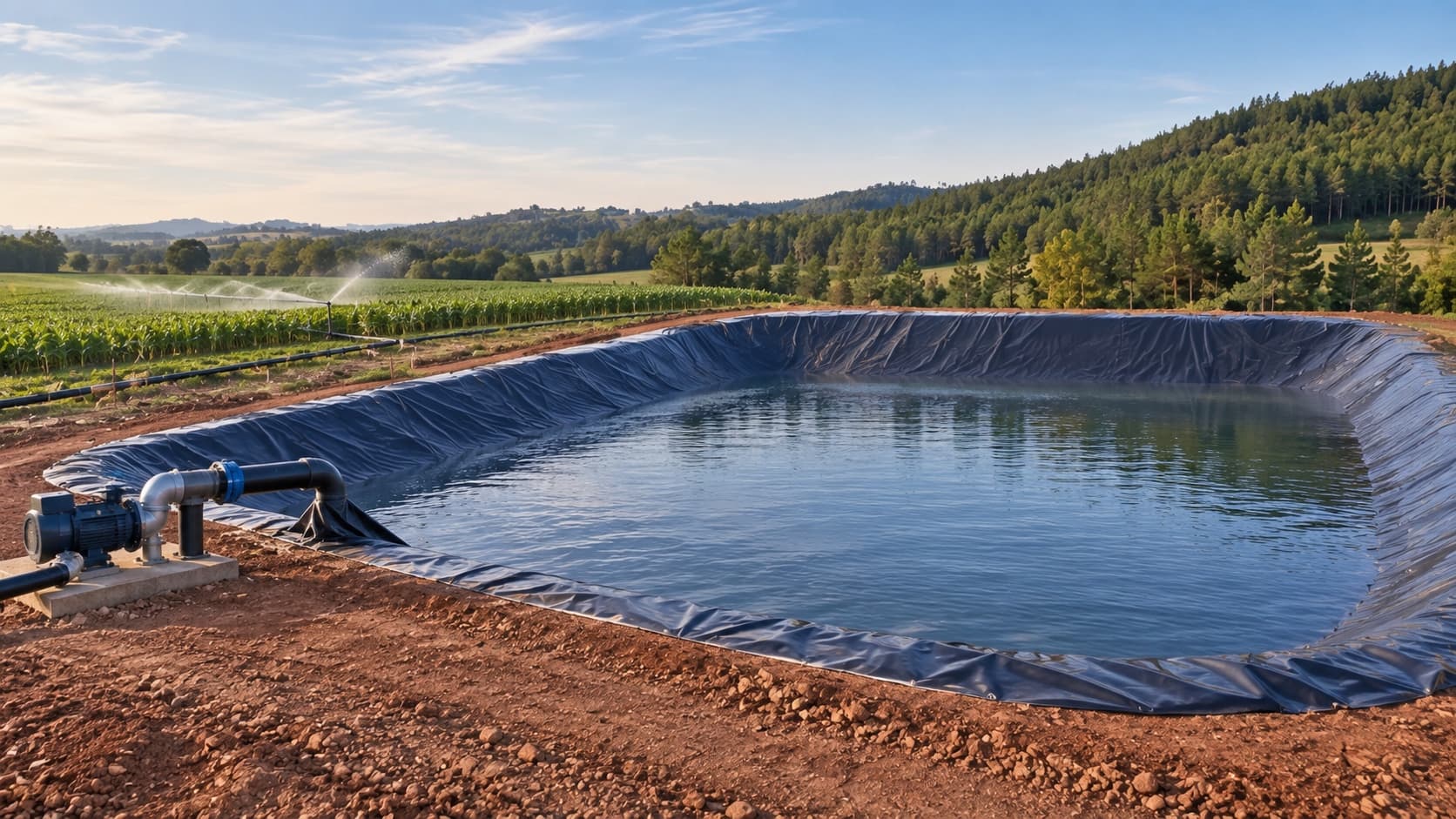
In brief
- Useful storage depends on supply, demand, and the storage period.
- Climate, irrigated area, crop, soil, and irrigation method affect the balance.
- Evaporation, seepage, overflow, and water abstraction rules matter.
- Site, pumping, liner, and operations must be compatible.
An irrigation reservoir should not be sized only by the area available for excavation. Useful volume must match water that can be captured, the crop calendar, application method, and plans for periods of lower availability.
Balance supply and demand
Gather local flow or rainfall records, seasonality, abstraction restrictions, and realistic filling options. Record irrigated area, crop, calendar, method, and crop-stage demand. Regional averages do not guarantee water availability on a specific farm.
Account for losses and operations
The balance may include evaporation, seepage, conveyance losses, overflow, and dead storage. Estimates should reflect local climate, geometry, and operation. Define pumping rate, operating hours, and priorities if stored water runs low. Water that cannot be delivered at the required pressure and timing will not meet the farm's needs.
Assess the site and structure
Topographic and geotechnical surveys help compare excavation, embankments, stability, drainage, and access. Groundwater, rock, settlement, or water beneath the liner may change the design. If a geomembrane is selected, specify the subgrade, thickness, protection, anchorage, penetrations, drainage, and quality control as one system. The liner does not replace slope stability or groundwater assessment.
Information for the designer
Gather site levels, water source and applicable permits, crop area and calendar, flows, drought strategy, soil conditions, drainage, equipment, power, and construction access. Good planning balances capacity, availability, pumping cost, and operation; a larger excavation is not always better.
Technical references
- Brazilian National Water Agency — Irrigation Atlas
- ANA/UFPR — Net evaporation from artificial reservoirs
- ANA — Hidroweb historical records
Sources checked 23 September 2026. Permits depend on location and project scope. A qualified professional should assess design and structural safety.