
Fish farming
Geomembrane-lined channels for fish farming: what to assess
Lined channels can be part of an aquaculture system, but the liner alone does not determine performance. Learn what to assess before design.
In brief
- A lined channel is only one part of an aquaculture system.
- Species, life stage, water quality, flow, and husbandry shape requirements.
- Geometry, drainage, cleaning, and access must work together.
- Specify the geomembrane for actual support, exposure, and operation.
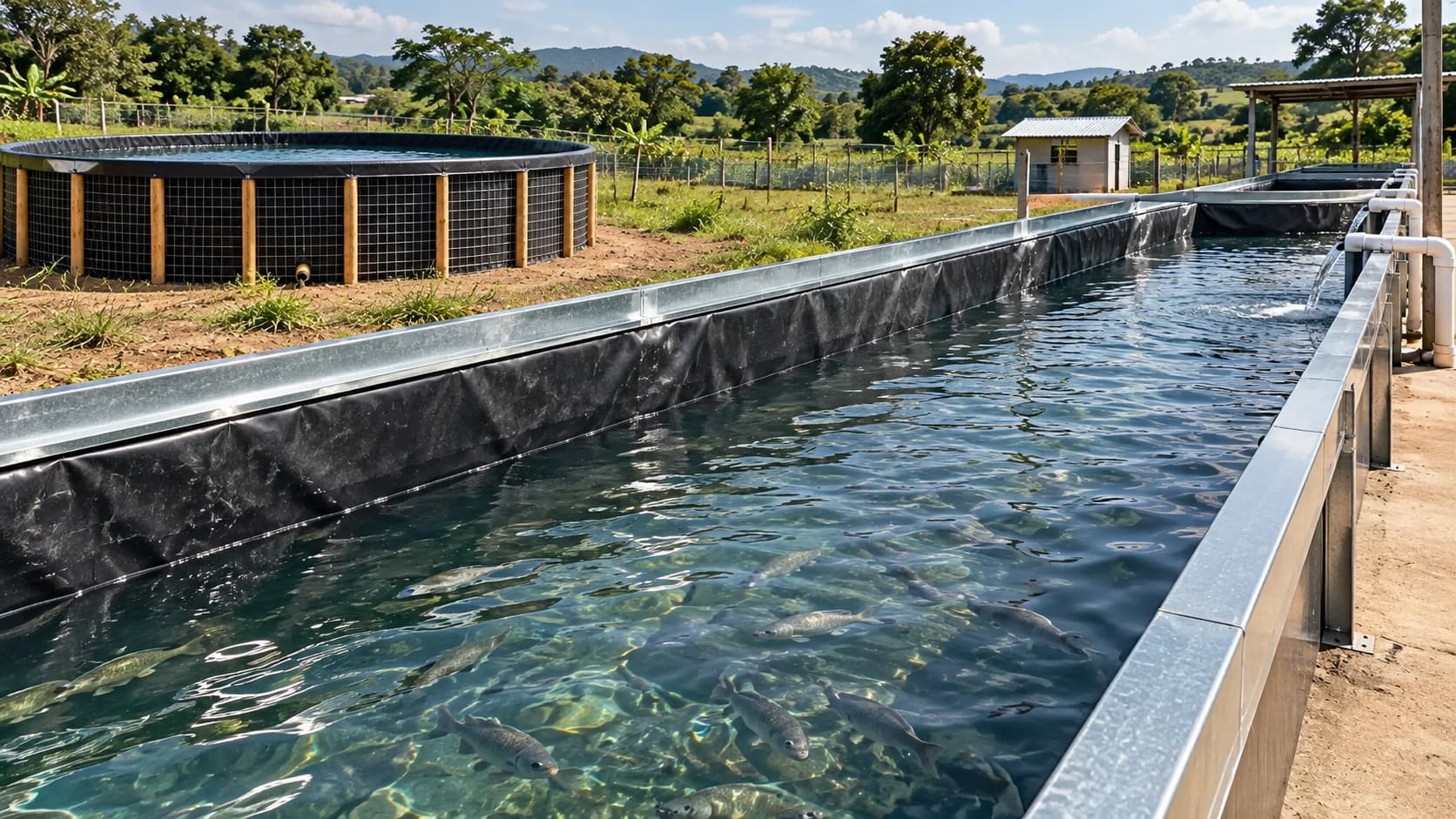
Lined channels can convey or hold water in some fish-farming systems. The liner alone does not determine production capacity or water quality. Design should start with the production system, the organisms' needs, and how water enters, circulates, is treated, and leaves.
Start with species and production method
Species, growth stages, and production systems have different requirements for temperature, dissolved oxygen, water quality, circulation, and handling. Before setting channel dimensions, document the species and production stages, stocking plan set by an aquaculture professional, water source and seasonal quality, inflow and discharge, cleaning, and solids management.
An aquaculture professional should assess these inputs. Dimensions from another facility should not be copied without checking species, scale, climate, and operating conditions.
Coordinate circulation and water quality
A large channel can still have poor circulation or stagnant areas. Consider inlets, outlets, recirculation, aeration where designed, drainage, screens, protection from animals, and equipment access. Define an operational response to power, pump, or supply failures that could threaten stock.
Monitor water using parameters and intervals suited to the system. Clear appearance is not a measurement. Confirm treatment compatibility with fish, liner, pipes, and process before use.
Specify the liner with its foundation
Assess support and smoothness of the subgrade, puncture risks, expected movement, sunlight, water-level changes, chemical compatibility, and protection during installation and operation. Detail anchors, corners, transitions, pipe penetrations, and drainage.
Material, thickness, seams, and acceptance criteria belong in the project specification. The geomembrane does not replace structural assessment or seam quality control. See the guide to smooth or textured HDPE geomembranes.
Plan cleaning and inspection
Decide how the channel will be drained, cleaned, and inspected without damaging the liner. Gather species, scale, water data, flows, site levels, power, drainage, husbandry, cleaning, and effluent destination for the design team.
Aquaculture, hydraulic, civil, and environmental requirements should be coordinated before material selection. Verify species-specific, environmental, and water-use requirements with qualified local professionals.