
Rainwater
Rainwater for non-potable uses: how to plan the system
Collected rainwater can serve non-potable uses when the system is designed for that purpose. Learn how to separate networks and plan treatment and maintenance.
In brief
- Define the intended use and required water quality first.
- Roof, gutters, first flush, filter, storage, and distribution form one system.
- Clear appearance does not prove water is potable.
- Identify and separate non-potable plumbing from drinking-water plumbing.
Stored rainwater can reduce demand on other sources for compatible uses such as irrigation or floor washing. Safety depends on intended use, quality, collection, and maintenance. Water should not be considered safe to drink because it looks clear.
Define the use before selecting components
List outlets, estimated demand, seasonality, and the impact of interruption. Irrigation, washing, and toilet flushing have different needs; other uses may need specific assessment. Treatment must suit the use, materials, and local requirements.
Water for drinking, food preparation, or personal hygiene must meet applicable drinking-water requirements. Brazil's Ministry of Health Ordinance 888/2021 does not allow potability to be assumed without meeting those requirements.
Plan the water path
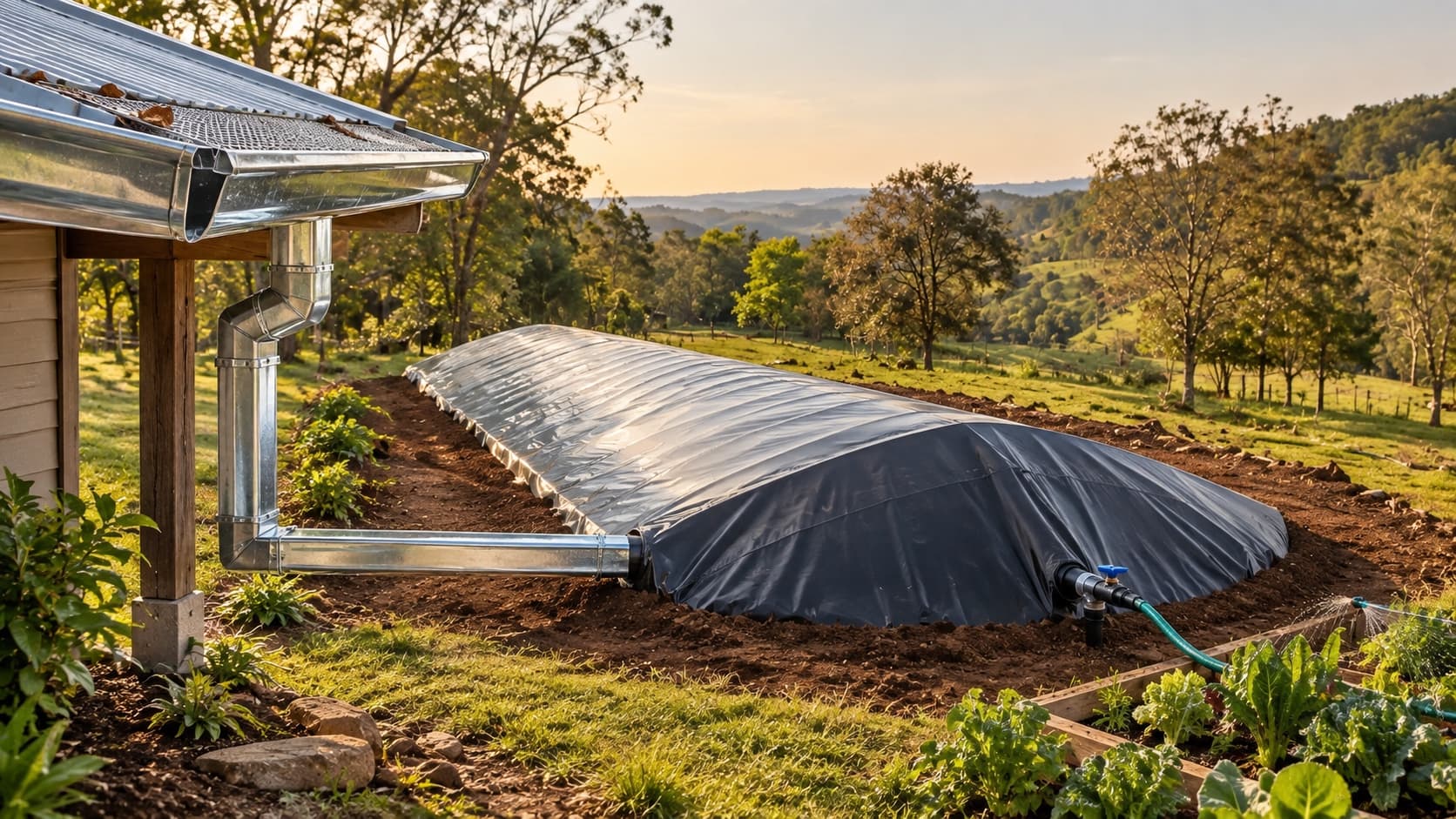
Roofs and gutters can collect dust, leaves, and contaminants. Assess roofing, screens, first-flush diversion, filtration, tank inlet, overflow, and cleaning access. A closed tank limits light, debris, and animal entry. Label pipes and outlets so they are not confused with the potable network.
Prevent cross-connections
Keep networks independent and prevent rainwater from flowing back into the public supply or mixing with drinking water. Backup supply must preserve hydraulic separation under the design and applicable rules.
Inspect and maintain
Include gutters, screens, first-flush devices, filters, covers, overflow, pumps, pipes, and outlets in the routine. Inspect after dry periods, heavy rain, or roof maintenance. For sensitive uses, define water-quality parameters, sampling, and treatment with a qualified professional.
See also how to size a rainwater harvesting cistern.
References
- Brazilian Ministry of Health — Ordinance 888/2021
- Funasa — is clear water always safe to drink?
- Brazilian Law 14,546/2023
Sources checked 23 September 2026. This article covers non-potable uses and does not replace public-health assessment or local requirements.