In brief
- Clean the roof, gutters, and filters before the rainy season.
- Divert the first runoff from each event to reduce the dirt load.
- Keep the tank, lid, vent, and overflow protected from animals and contaminants.
- Clear water is not necessarily potable water; treatment and control depend on the intended use.
After sizing a cistern, an equally important stage begins: preserving water quality throughout operation. The most reliable strategy is not to rely on a single filter, but to create several barriers from the roof to the point of use.
1. Prevention is better than removal
Leaves, dust, animal droppings, and small debris accumulate on the roof. Before the rains, inspect the roof, gutters, downpipes, and screens. Branches over the roof and frequent bird access increase the load reaching the system.
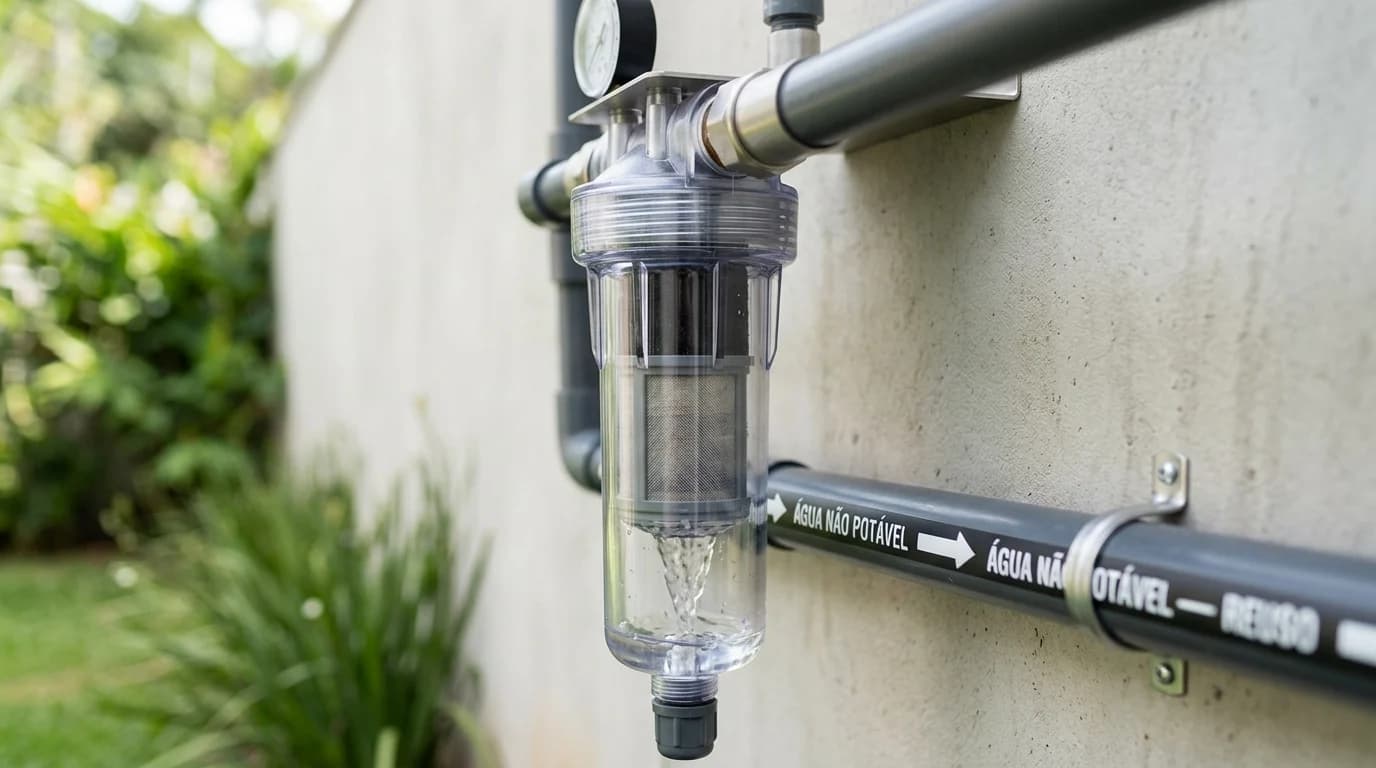
A screen retains larger solids, but it does not remove microorganisms or dissolved contaminants.
2. Divert the first runoff
The first runoff washes the collection surface. The first-flush device must receive this flow and be drained or reset according to its design.
There is no universal diversion volume per square meter for every roof and climate. Area, roofing material, time between rains, dirt load, and the final use of the water all change the decision.
3. Close contamination pathways
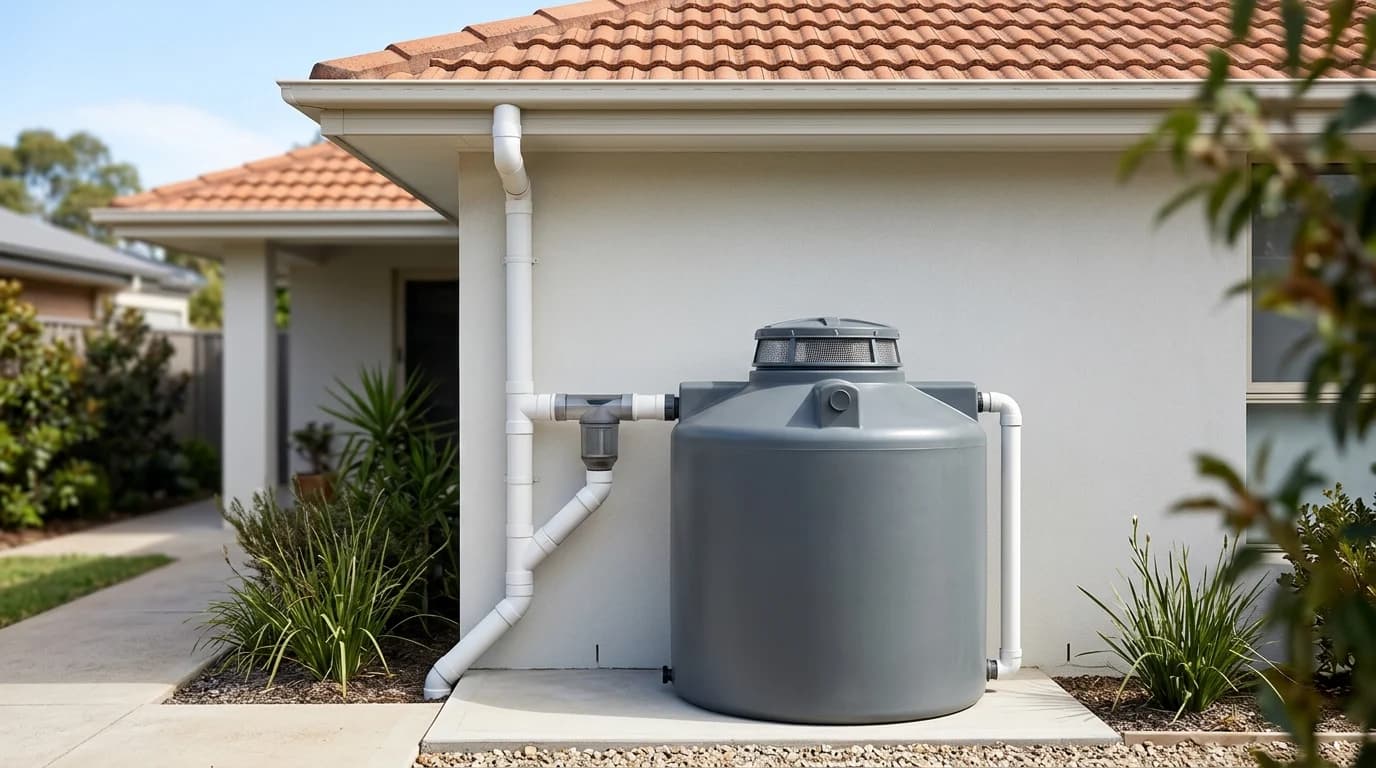
The cistern must remain covered and protected. Check the lid, screened vent, overflow, inlet, piping, and inspection points. Animals, insects, surface water, and objects used to remove water can contaminate the interior.
Prefer withdrawal through a pump or a clean tap. Buckets and hoses inserted into the tank carry dirt inside and make control more difficult.
4. Observe, but do not rely only on the senses
A change in color, odor, turbidity, or the presence of sludge is a warning sign. However, clear and odorless water may still be unsuitable for its intended use.
When water is intended for drinking, food preparation, or personal hygiene, it is considered water for human consumption. Brazilian Ordinance GM/MS 888/2021 establishes quality standards and control procedures; a rainwater source does not guarantee potability.
Brazilian Law 14,546/2023 also requires separation between rainwater networks or tanks and the public water network, as well as treatment that ensures safe use.
A routine for four moments
Before the rains
Clean the roof and gutters; check screens, lid, overflow, first-flush device, and animal access.
At each event
Confirm that the first runoff was diverted and that the device can operate again.
During use
Observe appearance, odor, integrity, and the withdrawal method. Do not connect the rainwater network to the potable-water network.
Periodically or after contamination
Clean and disinfect according to health guidance, inspect the structure, and test the water when required by its use. Product dosages must not be copied without checking concentration, label instructions, tank volume, and current guidance.
Three false equivalences
- a leaf filter is not water treatment;
- clear water is not proof of safety;
- chlorine does not correct every chemical contaminant.
LJS can support the physical assessment of cisterns, components, and maintenance access. Laboratory testing and treatment definition must follow the intended use and the appropriate professional responsibility.