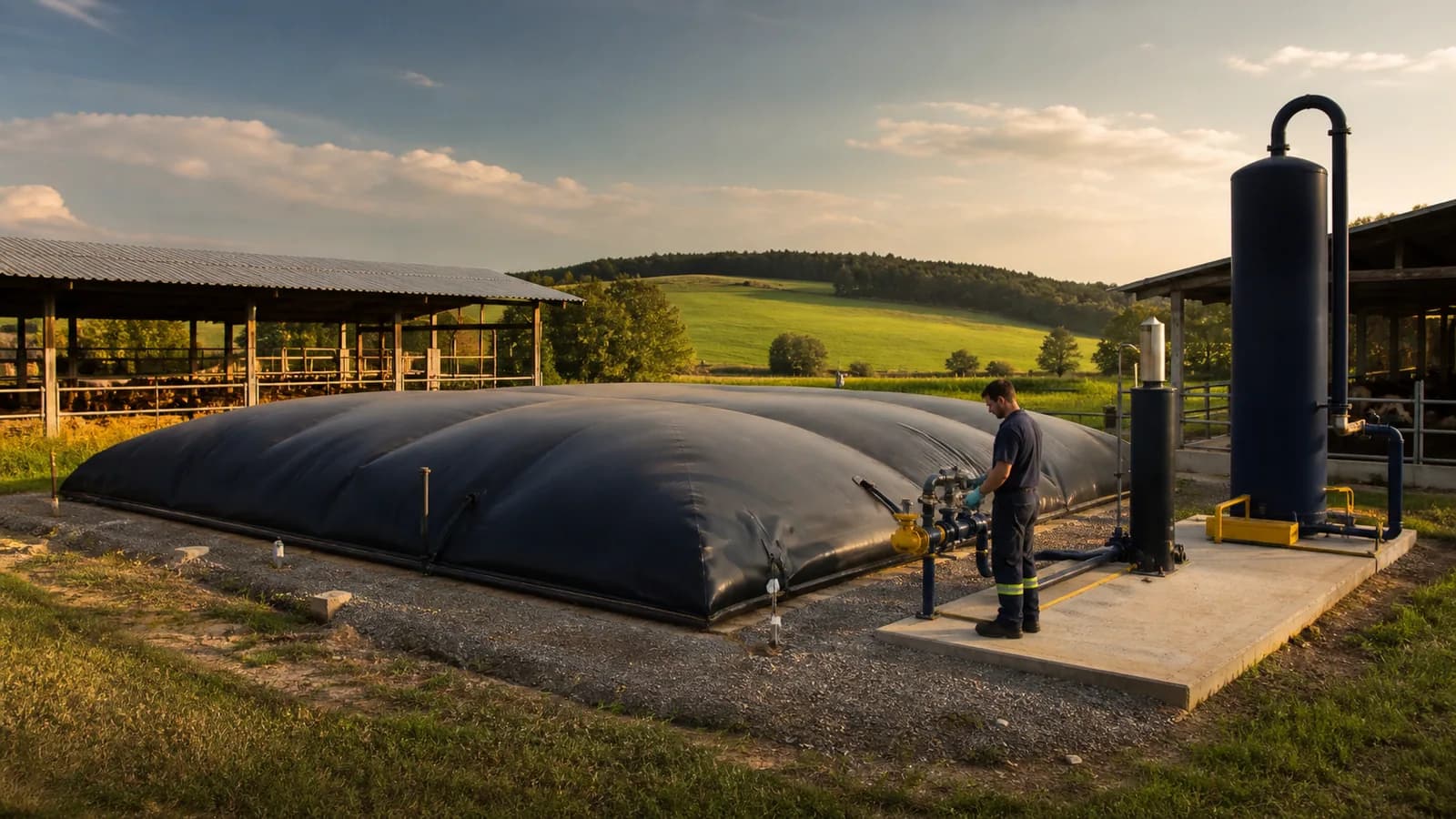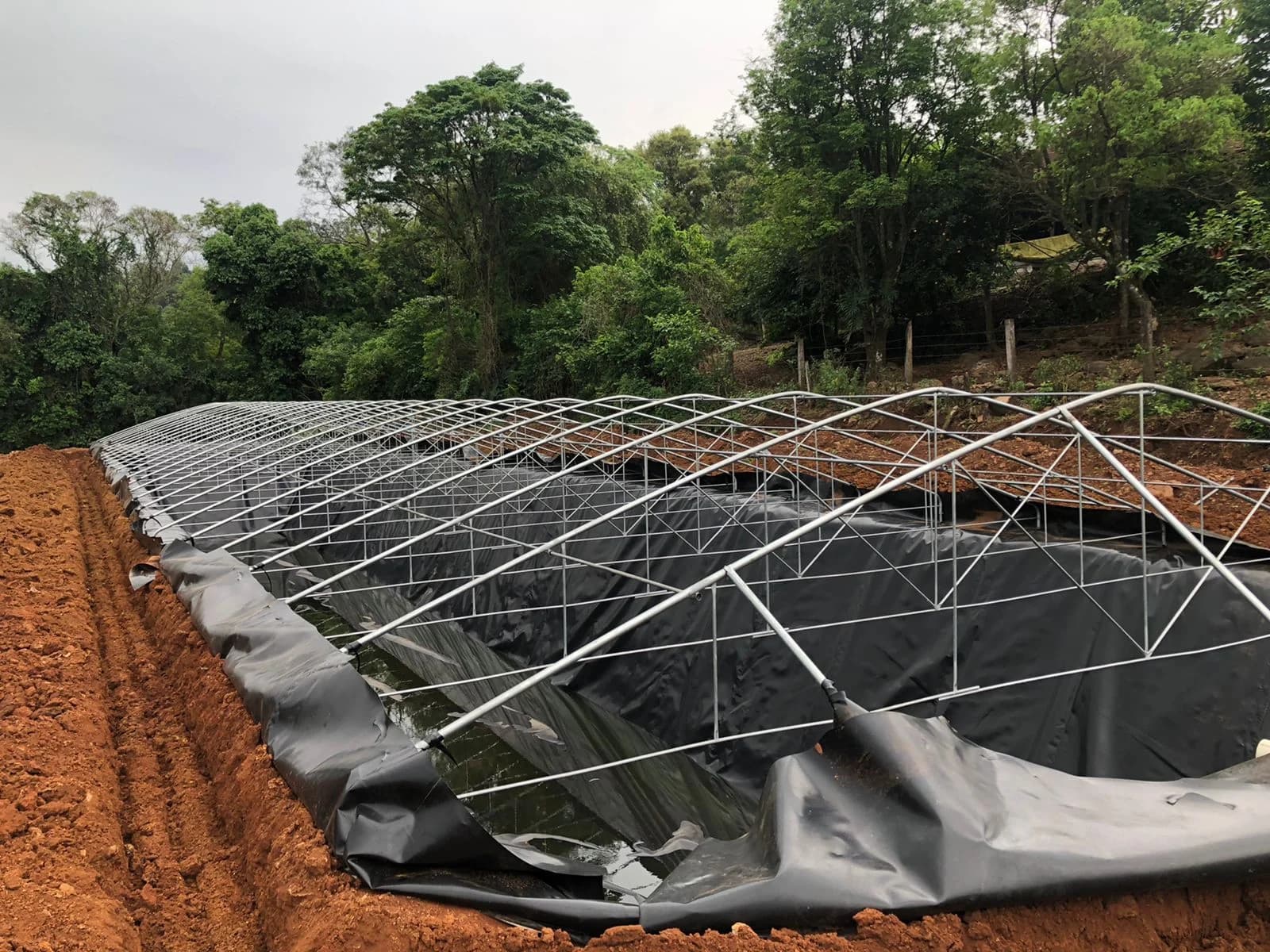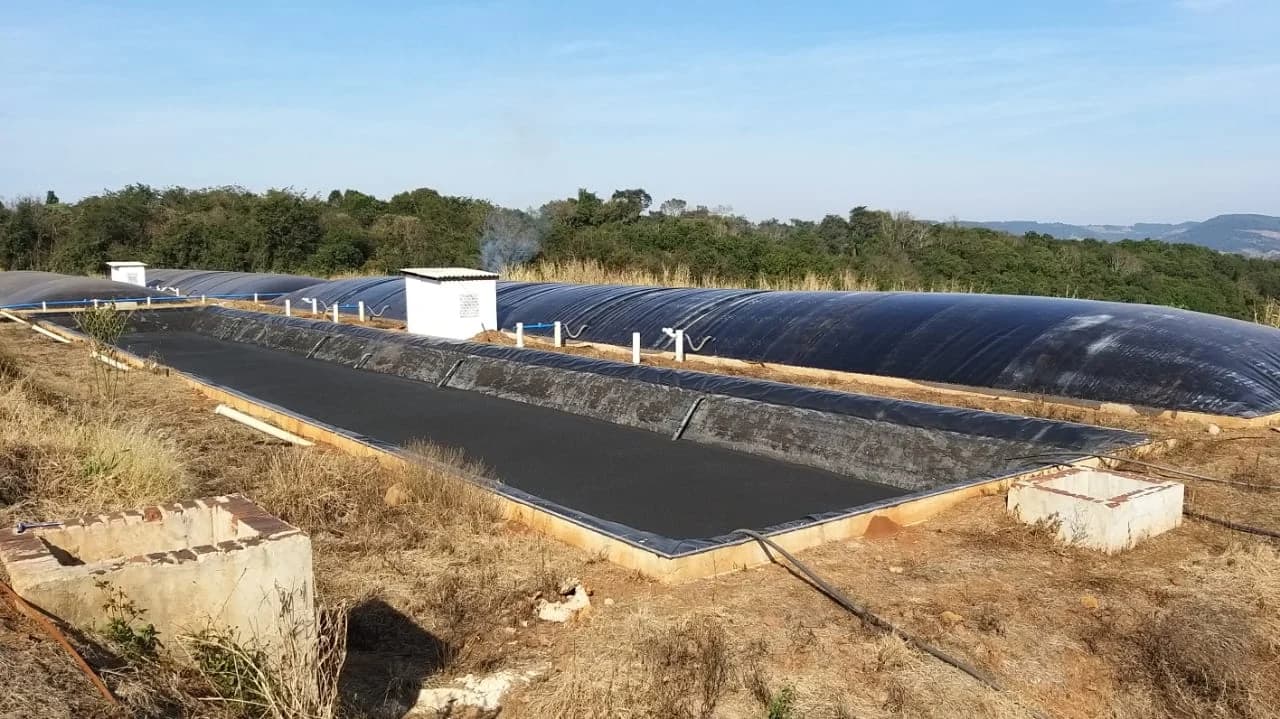
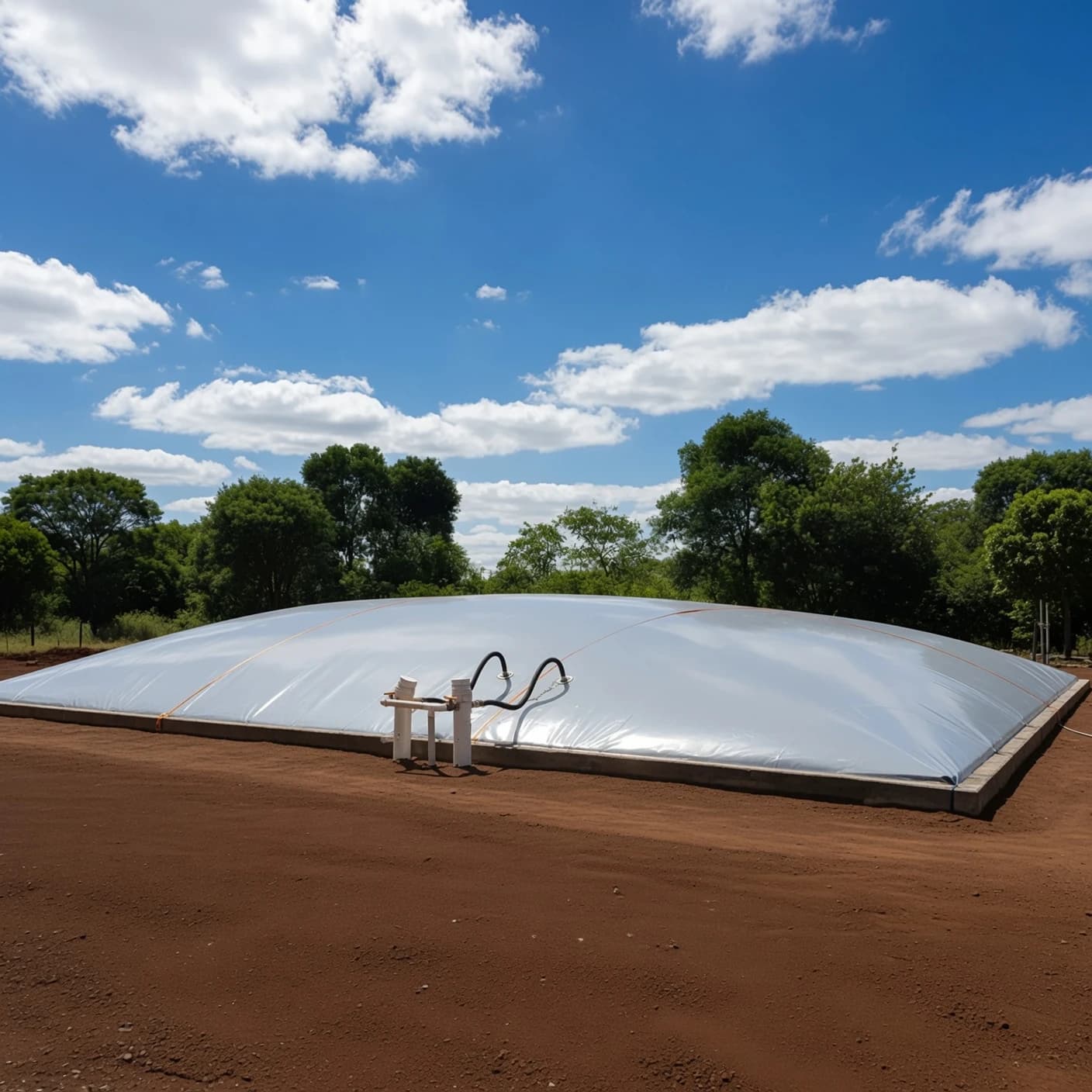
A biodigester can integrate organic-waste management, anaerobic treatment, and energy recovery. But the presence of manure on a farm does not, by itself, mean that any model or volume will deliver a viable system.
Before considering excavation and cover, it is necessary to map what enters, how feeding occurs, what leaves, and who will operate each stage. A biodigester is a continuous process, not merely a lined structure.
1. Start with the actual waste flow
The first survey must measure generation over time. Animal count is an initial reference, but the volume reaching the biodigester also depends on management, cleaning water, rainwater collection, losses, and solids separation.
Record at least:
- waste source;
- number of animals or production capacity;
- measured daily volume, not only an estimate;
- feeding frequency and times;
- solids content and variations between production cycles or seasons;
- presence of sand, bedding, hair, feed, packaging, and other materials;
- cleaning products, disinfectants, or medication that may reach the flow;
- improper rainwater contributions;
- planned production expansion.
Embrapa notes that different biodigester models depend on feeding regularity and substrate characteristics. A continuously fed system must receive a load compatible with its operation; large fluctuations may require equalization or another management strategy.
2. Measure flow and load during representative periods
A single measurement can conceal actual behavior. Observe routine days, washing, production-cycle changes, and events that alter dilution. For open facilities, separate rainfall contribution so the treatment is not sized as though all water were organic waste.
Digestion-chamber volume often relates daily flow and hydraulic retention time:
reference useful volume = daily flow × retention time
This relationship is only part of sizing. Temperature, solids, organic load, microbiological activity, mixing, geometry, and operating volume affect the process. Embrapa technical material presents the formula as a practical estimate while emphasizing that manure-degradation capacity depends on several factors.
Therefore, copying retention time from another operation without comparing climate, substrate, and operation creates false precision.
3. Select the process before defining the structure
Biodigesters have different configurations. Tubular models, covered ponds, and gas-holder systems have distinct construction and operating behavior.
Selection must answer questions such as:
- will feeding be continuous or batch-based;
- what solids concentration will reach the reactor;
- will solids be separated before the inlet;
- what temperature variation is expected;
- how will sediment and scum be prevented or removed;
- how will the system be emptied and inspected;
- what stability and control must the process maintain;
- which permitting requirements apply.
Analysis and sizing must begin with the defined process and only then translate it into volume, geometry, liner, cover, and piping.
4. Check ground, base, and groundwater
The site conditions construction. Before excavation, assess:
- topography and inlet and outlet elevations;
- soil type and slope stability;
- presence of rock or organic soil;
- groundwater level;
- surface drainage around the structure;
- machinery and maintenance access;
- distance from facilities generating the waste;
- digestate route to storage or use;
- setbacks and restrictions defined by permitting.
A high groundwater level or unsuitable soil may require changes in depth, geometry, drainage, or construction method. Surface water must also be prevented from entering the structure or pressing against the liner from below.
5. Integrate lining, cover, and piping
A rural biodigester may include a prepared base, liner, flexible cover, anchoring, feed inlet, digestate outlet, biogas line, valves, drains, and safety devices. These elements must be detailed as a set.
For the liner system, check:
- material compatibility with the substrate and exposure conditions;
- base preparation and acceptance;
- puncture protection;
- inlet and outlet details;
- liner and cover anchoring;
- accommodation of level and pressure variation;
- welding and quality control;
- ability to inspect and repair.
The cover must not be treated as an isolated accessory. It contains the gas and is exposed to wind, rain, temperature, internal pressure, and operating movements.
6. Define biogas use before calculating savings
Biogas and biomethane are not synonyms. Biogas leaves the process as a mixture whose composition and flow vary. To supply equipment or meet a biomethane specification, moisture, hydrogen sulfide, carbon dioxide, and other contaminants may need to be removed, in addition to compression, control, and regulatory compliance.
Before investing, map:
- expected production as a range with stated assumptions;
- current farm energy consumption;
- hourly consumption profile;
- distance from the biodigester to the point of use;
- equipment that will use the gas;
- need for treatment, storage, or safety flaring;
- shutdown and maintenance periods;
- person responsible for operating the gas system.
When production and consumption do not coincide, excess gas needs a safe route. When consumption exceeds production, a supplementary source must exist. Economic analysis must include this intermittency, maintenance, and component service life rather than assuming every theoretical cubic meter will be used.
7. Plan the destination of digestate
Anaerobic digestion does not make water, nutrients, or all substrate matter disappear. Biodigester effluent still requires compatible storage, analysis, and destination.
The book Fundamentals of anaerobic digestion, biogas purification, use, and digestate treatment, made available by Embrapa, emphasizes that sizing agricultural land for digestate recycling must relate nutrient supply to long-term crop demand.
Before implementing the system, answer:
- what digestate volume will be produced;
- where it will be stored;
- what its expected composition is and how it will be tested;
- which area and crops can receive it;
- during which periods application is possible;
- how it will be transported and distributed;
- which environmental and agronomic rules apply;
- what alternative exists when application is prevented.
Sizing the biodigester without closing the digestate balance transfers the problem to the outlet.
8. Treat safety as part of design
Biogas can be flammable and contain toxic and corrosive gases. Confined spaces, electrical equipment, leaks, flashback, and overpressure require dedicated analysis and measures. The solution must provide ventilation, signage, controlled access, relief devices, compatible materials, grounding, and procedures according to the actual configuration and applicable standards.
Trained people must perform operation and maintenance. Never improvise work on a gas line, enter a confined space without the required controls, or use a flame to locate a leak.
9. Define routines, responsibilities, and indicators
A biodigester needs consistent operation. The plan must state who records feeding, checks pressure and level, inspects the cover and piping, removes condensate, monitors digestate, and responds to an anomaly.
Simple indicators help detect behavioral changes:
- feed volume and characteristics;
- temperature, when relevant to control;
- biogas pressure and flow;
- gas consumption or destination;
- digestate volume;
- shutdowns, alarms, and maintenance;
- visual condition of liner, cover, anchoring, and piping.
The exact set depends on the process and automation level. What matters is that the team can compare planned and observed operation.
Initial-assessment checklist
Gather this information before requesting a proposal:
- species, number of animals, and production system;
- measured daily manure volume;
- routine and water used for cleaning;
- solids content or available analyses;
- foreign materials present in the flow;
- site plan, photographs, elevations, and topography;
- soil and groundwater information;
- existing permits, conditions, or design;
- energy consumption and candidate equipment for gas use;
- area, crops, and logistics planned for digestate;
- person or team that will operate the system;
- expansion expectations.
The design closes when every output has a destination
A coherent biodigester connects waste generation, digestion, biogas, digestate, the site, and operating routines. If any stage remains undefined, the risk appears later as low utilization, difficult maintenance, or rework.
LJS works on the physical structures for biodigesters and water and effluent treatment. Send production, management, and site data to organize an initial assessment without reducing the project to equipment selection.
Technical references
- Embrapa Swine and Poultry — biodigester and preliminary sizing
- Embrapa — sizing, methane potential, and digester costs for swine manure
- Embrapa — fundamentals of anaerobic digestion, biogas purification, use, and digestate treatment
- Embrapa — biodigester for small agricultural operations
- Brazilian Ministry of Cities — PROBIOGÁS Program
- CONAMA — Resolution 430/2011 on effluent discharge
These references guide general understanding of the process. The design must verify permitting, safety, agronomic and environmental requirements, technical standards, and site-specific conditions.