In brief
- There is no universal thickness for a cistern, pond, or manure-storage basin.
- The fluid, base, loads, exposure, and consequences of failure must be assessed together.
- A thicker liner does not correct a poor subgrade, deficient welds, or inadequate protection.
- Manufacturing compliance does not replace system design.
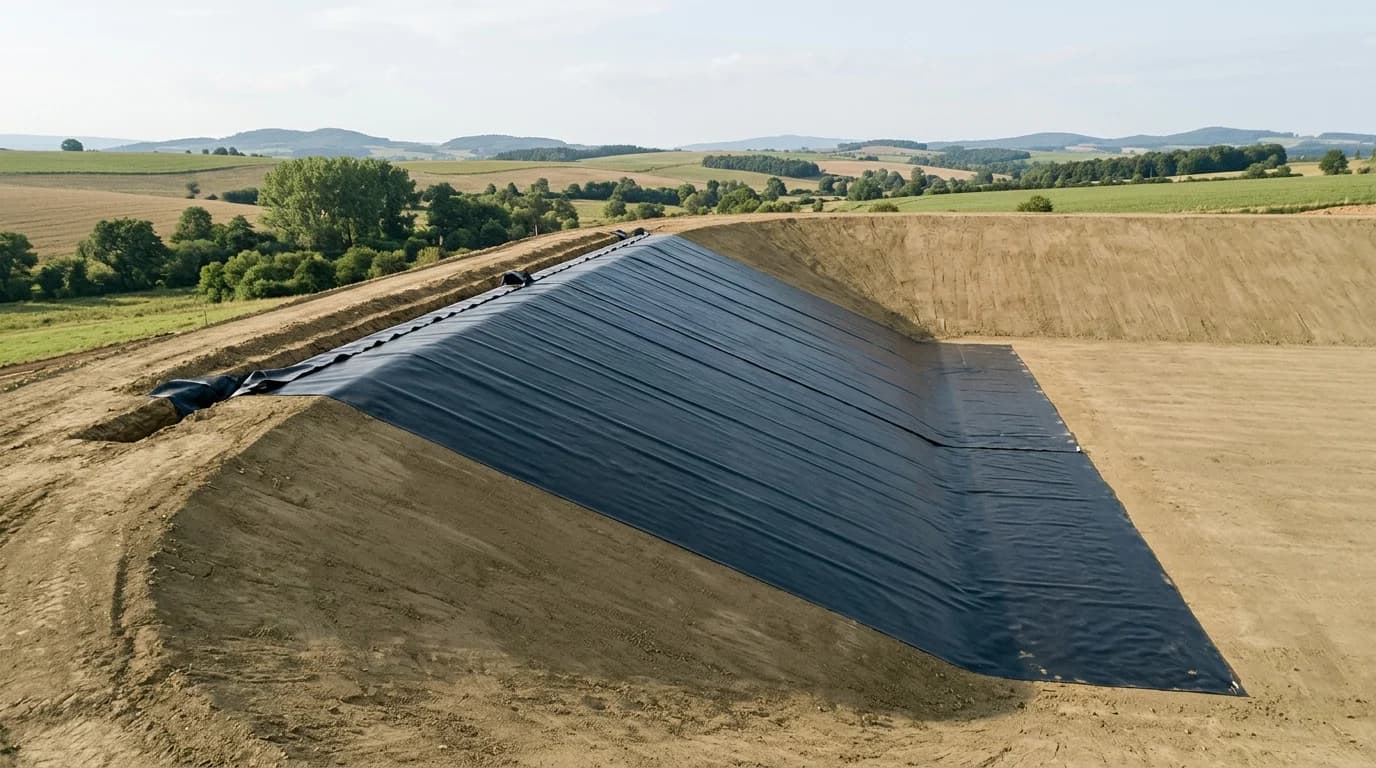
The conversation often begins with a direct question: “Should I use a 1 mm or 1.5 mm geomembrane?” The problem is that the number alone does not describe the project. Two ponds with the same volume may require different solutions because of the ground, stored liquid, operating conditions, and the damage that failure could cause.
The correct thickness is a consequence of the design. Before comparing prices per millimeter, understand which questions actually change the decision.
What thickness changes—and what it does not solve
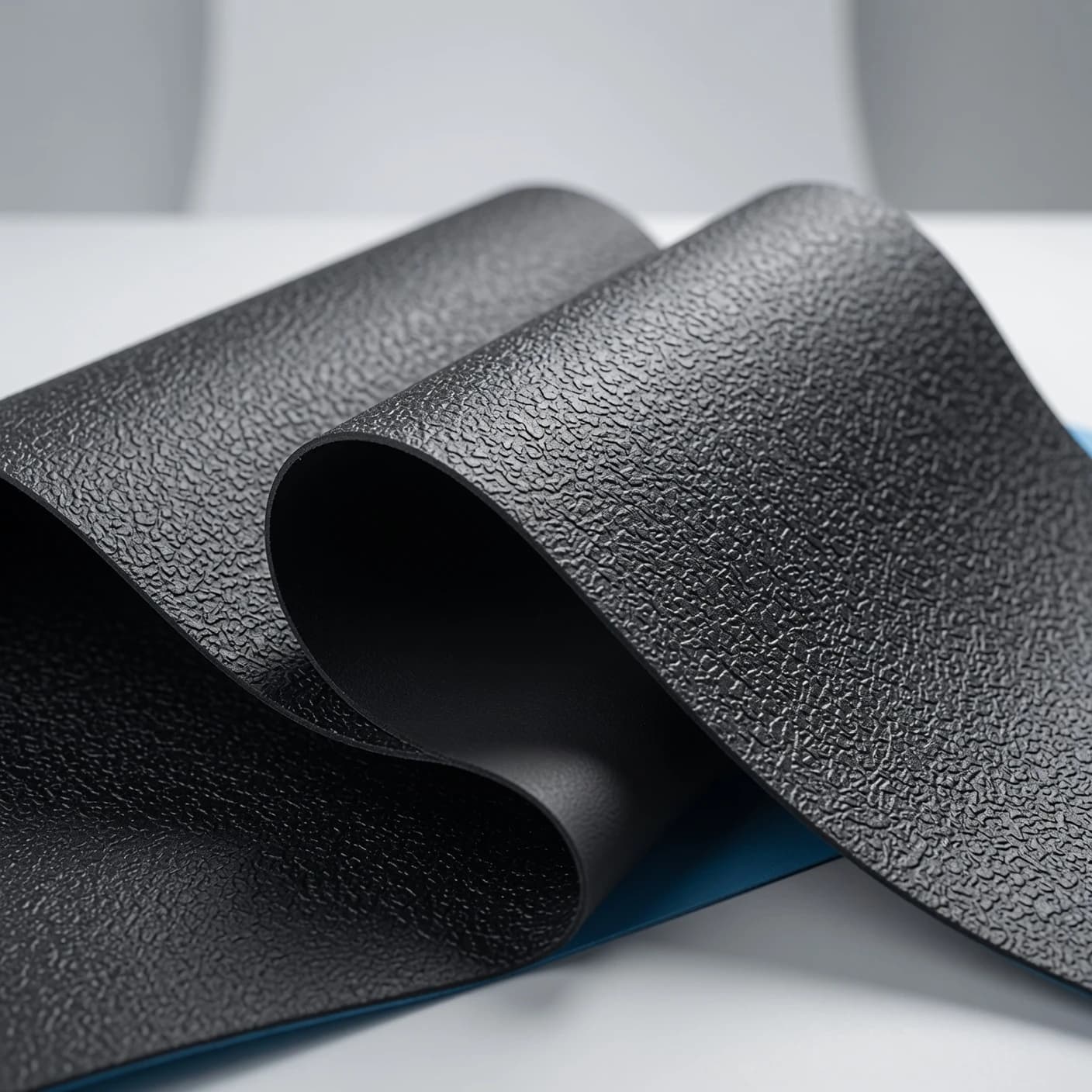
Within the same material family, thickness contributes to properties such as puncture, tear, and installation-stress resistance. This does not mean that “thicker is better” is a sufficient rule.
Performance depends on the complete system. An angular stone under the liner can concentrate pressure. Traffic or cleaning without protection can damage the surface. A poorly detailed transition can impose localized deformation. None of these conditions disappears merely by increasing thickness.
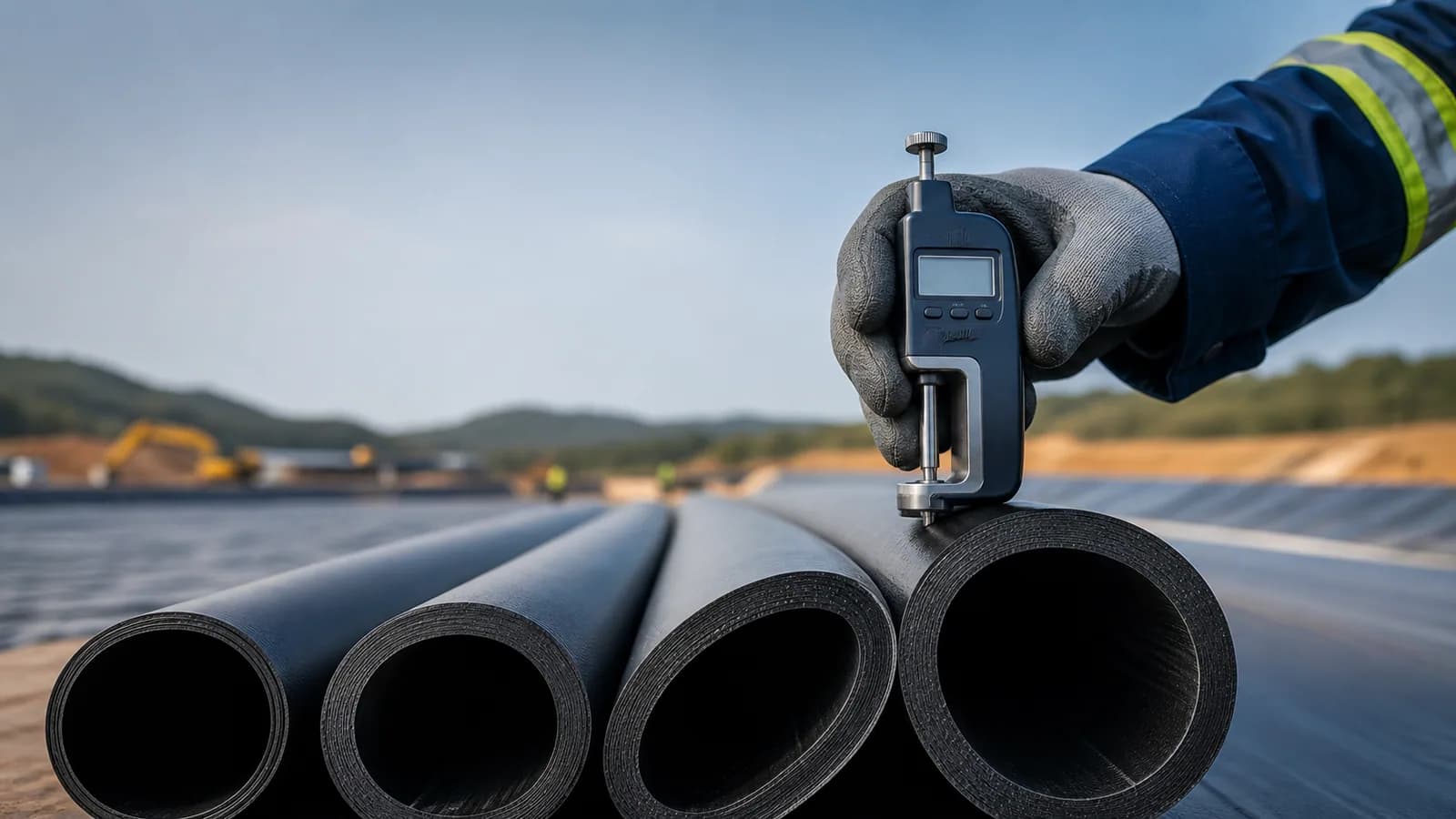
The international GRI-GM13 specification establishes manufacturing-quality requirements for HDPE geomembranes over a range of thicknesses. It is useful for qualifying the material, but it does not state which thickness automatically corresponds to each application.
Six questions that guide selection
1. What will be contained?
Clean water, effluent, manure, leachate, and industrial solutions present different conditions. Chemical composition, temperature, solids, cleaning, and possible reactions must be included in the compatibility assessment.
2. How is the liner supported?
A firm, regular, accepted soil provides a different condition from a base with stones, settlement, voids, or groundwater. The need for protective geotextile, a selected soil layer, or drainage must be analyzed together with the geomembrane.
3. Which loads and contacts will occur?
Liquid depth, equipment, people, animals, aggregate, piping, and cleaning routines create different demands. Risk during construction may also be greater than during operation.
4. Will the geomembrane be exposed or covered?
Exposure to sunlight, temperature variation, wind, and maintenance changes the scenario. For covered liners, the cover material, placement method, and ability to locate a later defect enter the assessment.
5. Where are the critical details?
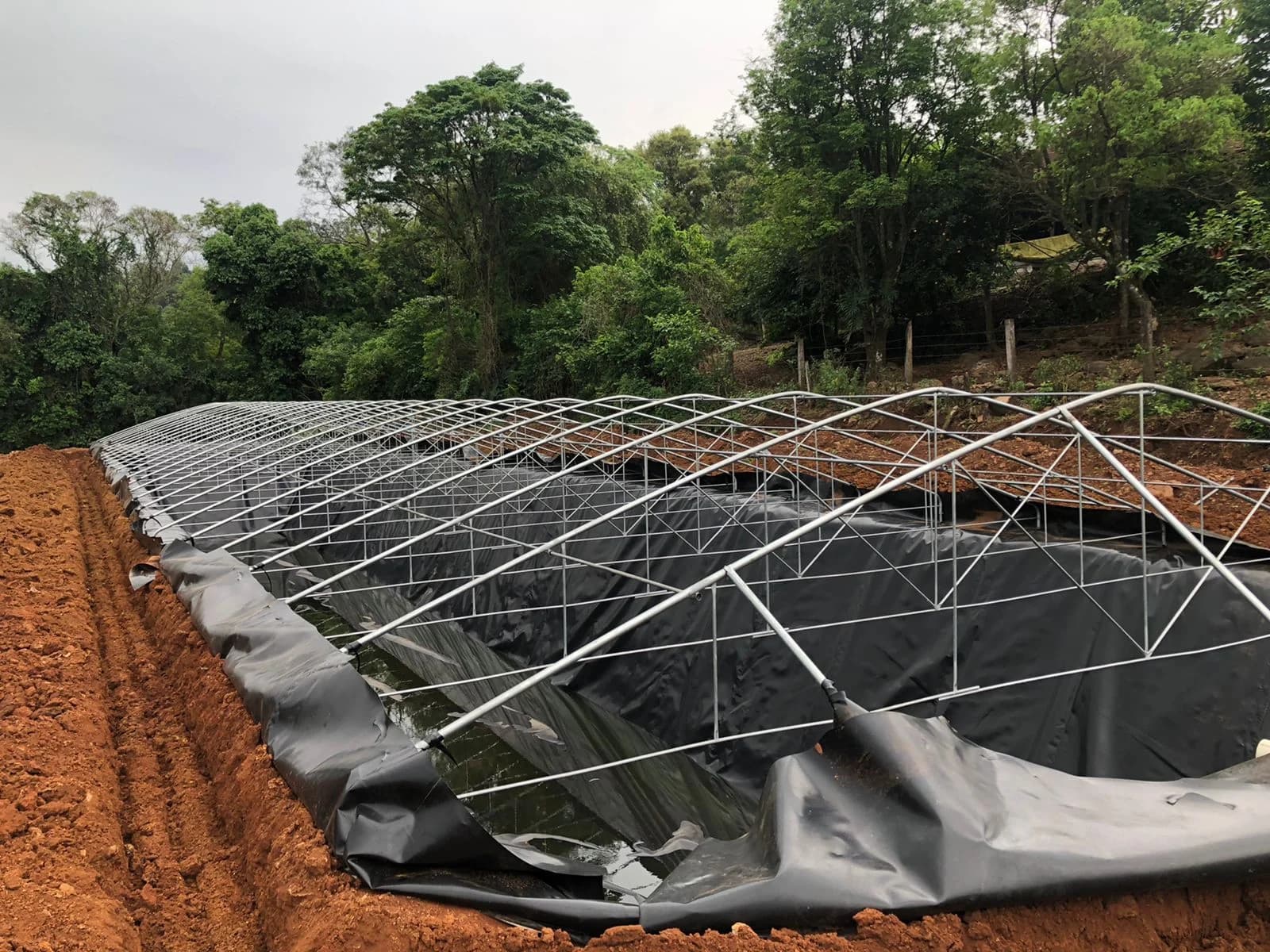
Slopes, corners, anchoring, pipes, and concrete interfaces concentrate design decisions. The system must accommodate its geometry without creating stress or field improvisation.
6. What happens if a failure occurs?
A small water reserve and a high-consequence environmental containment system do not have the same risk level. As the consequence increases, it becomes more important to combine the barrier with protection, drainage, detection, quality control, and a repair plan.
Three common purchasing mistakes
- Copying the thickness from another project: visual similarity does not prove equal soil, loading, or operation.
- Comparing only the price per square meter: preparation, installation, protection, and maintenance also form the life-cycle cost.
- Treating the product data sheet as the design: the sheet presents material properties; the design verifies whether they meet the actual system.
Data to bring to a technical assessment
Gather the fluid type, temperature, volume and depth, plan and sections, photographs and soil information, groundwater condition, expected exposure, traffic, cleaning method, piping, design life, and consequences of failure. With these inputs, analysis and sizing begin with actual risks instead of a catalog guess.
If the project is still in its early stages, also read how to prepare the ground for a geomembrane and the guide to HDPE geomembranes in reservoirs.
The best specification closes the system
The right question is not only “which thickness should I buy?” but “which system keeps the barrier intact under the conditions of this project?” LJS can support data collection and the selection of smooth HDPE geomembrane, protective layers, and the installation scope.
Technical references
- GRI-GM13 — manufacturing-quality specification for HDPE geomembranes
- USDA-NRCS — Pond Sealing or Lining, CPS 521
- U.S. EPA — Guide for Industrial Waste Management
International references support technical criteria but do not replace design, permitting, contractual requirements, or standards applicable in Brazil.