In brief
- Volume must start from actual manure generation, admitted rainfall, and the period before its destination.
- Diverting clean water away from the basin reduces volume, cost, and overflow risk.
- Soil, groundwater, geometry, barrier, drainage, and operation must be designed together.
- Swine operations in Santa Catarina must check IMA/SC Instruction 11 and current permitting requirements.
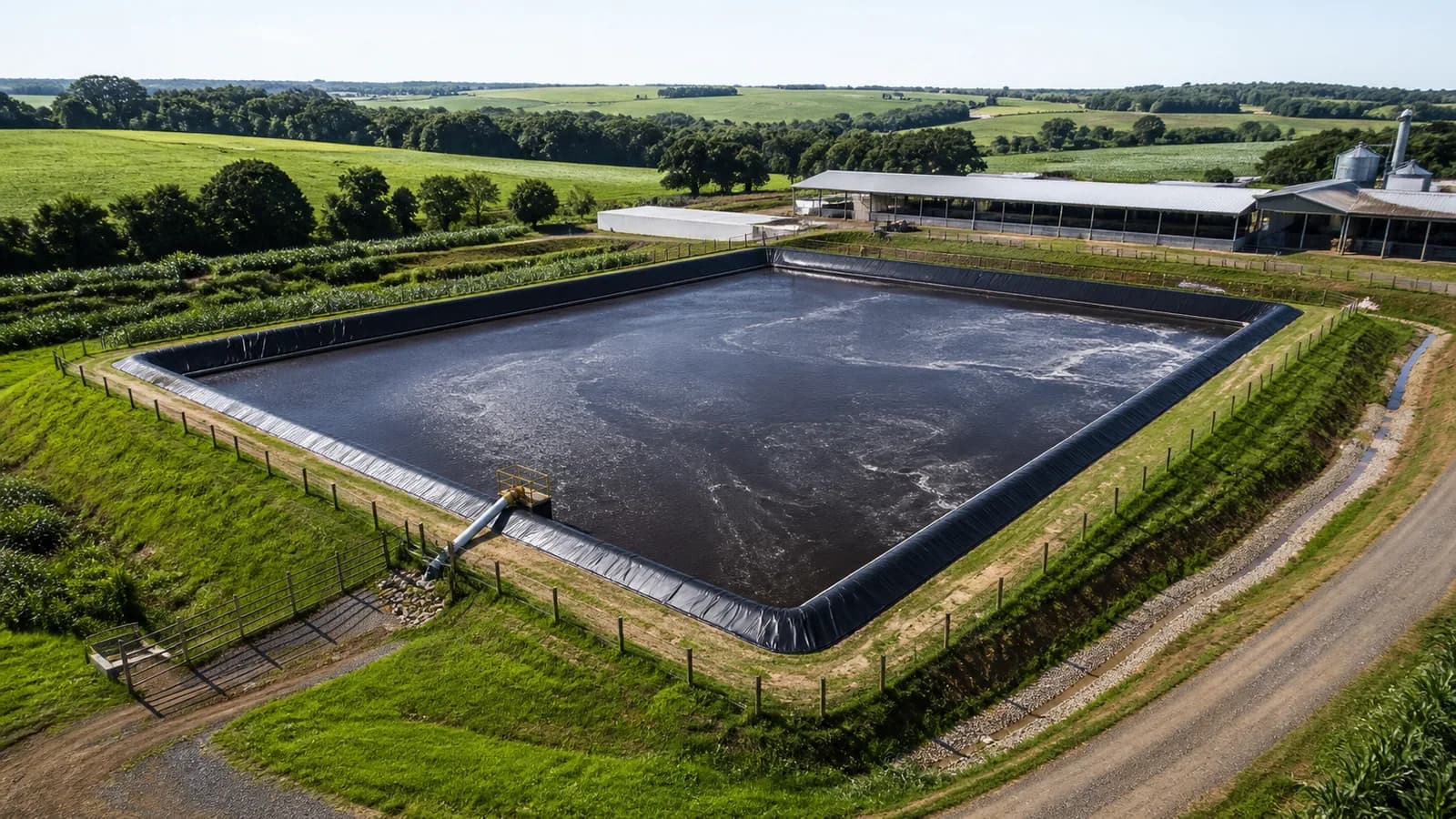
A manure-storage basin addresses a logistics need: receiving manure when it is generated and keeping it contained until its planned destination. When treated merely as “a lined hole,” the factors that control capacity, safety, and maintenance are left out.
Start with flow, not excavation
Animal count is an input, not the final volume. Production stage, stocking, wash water, drinker waste, solids, and the occupancy calendar change the flow.
An initial assessment may relate daily volume to the storage period. The design must add variation, the rain that actually enters, operating reserve, maximum level, and temporary unavailability of the application or transport route.
Divert clean water
Roofs, yards, and slopes can direct rain into the basin. Every liter of clean water mixed with manure takes up capacity, increases pumping, and can bring an overflow forward.
Gutters, channels, and surface drainage must carry clean water away without eroding the embankments. Freeboard and emergency overflow cannot be addressed only when the structure is already full.
Check the destination before defining size
Where and when will the material be applied, treated, or sent? The agronomic window, available area, weather, pump, and transport capacity control the actual waiting period.
Storage is not equivalent to complete treatment and does not authorize discharge. For land application, material composition and the recommendation must be evaluated; read the guide to effluent fertigation.
Soil and groundwater change the solution
Before finalizing geometry, investigate topography, rock, soft areas, flooding, and the groundwater table. Water or gas beneath the geomembrane may require drainage and venting. Slopes, bottom, anchor trench, and access must allow installation, pumping, and inspection.
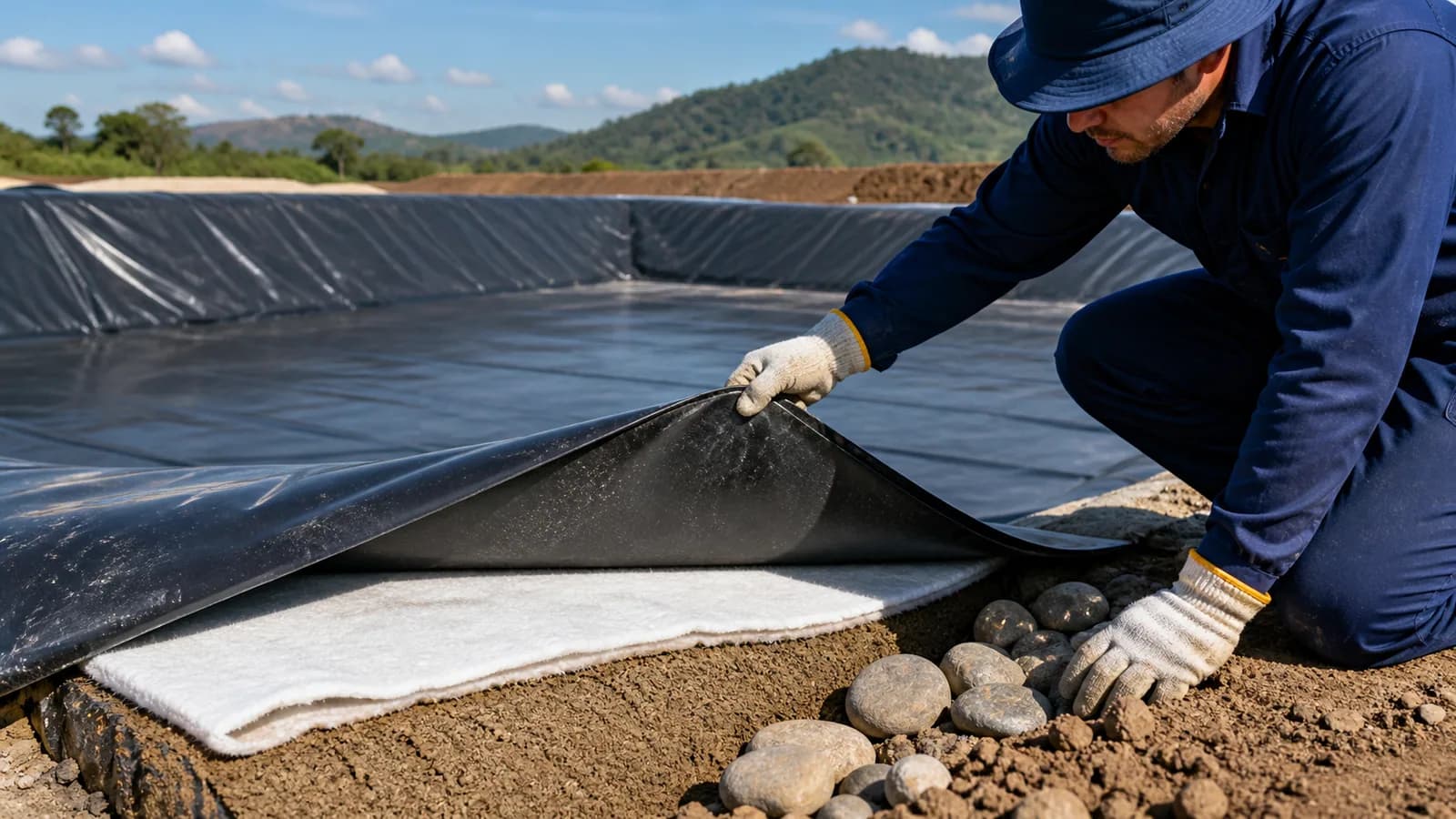
The barrier is not limited to the HDPE geomembrane. Subgrade preparation, protection, welding, pipe details, and quality control complete the system.
Swine-farming permitting in Santa Catarina
In the version reviewed on August 23, 2026, IMA/SC Instruction 11 establishes state requirements for lined collection, storage, and treatment systems, in addition to criteria described in its appendices and the permitting act.
This rule must not be generalized nationwide. Other states and municipalities may adopt different or additional criteria. The current version, permit conditions, and qualified professional must be confirmed before construction.
Nine minimum inputs
- species, production stage, stocking, and calendar;
- manure flow and variation;
- wash water and waste;
- admitted rainfall and clean water that can be diverted;
- characterization and final destination of the material;
- soil, topography, rock, and groundwater;
- withdrawal window and pumping capacity;
- storage rule and operating reserve;
- plan for extreme rain, equipment failure, leakage, and inspection.
With these inputs, lining ponds, manure-storage basins, and reservoirs can be sized as part of operations instead of as an isolated purchase of liner area.
Technical references
- Embrapa — Swine manure: storage in basins and treatment in ponds
- IMA/SC — Normative Instruction 11, Swine Farming
- CONAMA — Resolution 430/2011
Local requirements and the current permit version must be checked again. There is no universal thickness, period, or volume for every manure-storage basin.