In brief
- The geomembrane contains; the hydraulic and biological process treats.
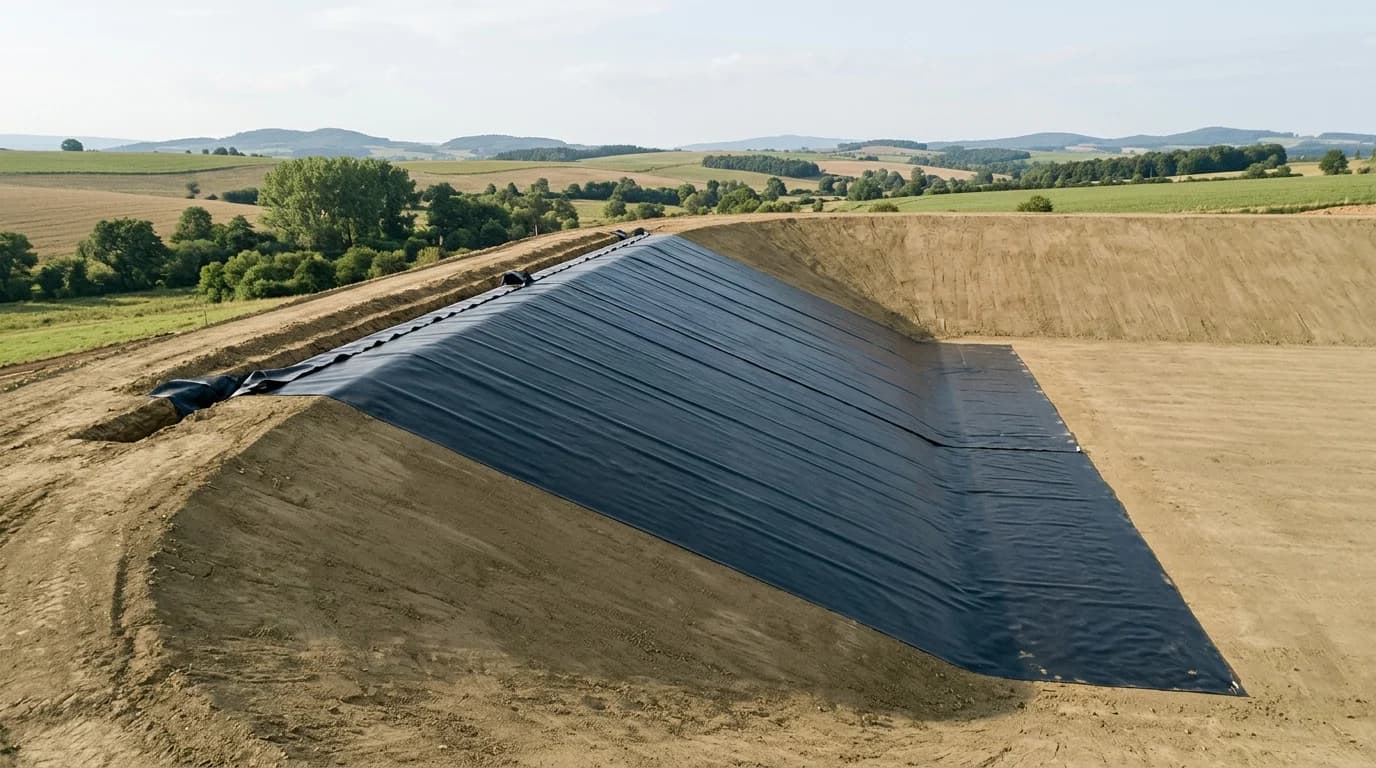
- Subgrade, groundwater, and gas must be assessed before the liner.
- Surface drainage, drainage beneath the liner, and hydraulics between cells have different functions.
- Monitoring level, embankments, sludge, pumps, and effluent quality preserves system capacity.
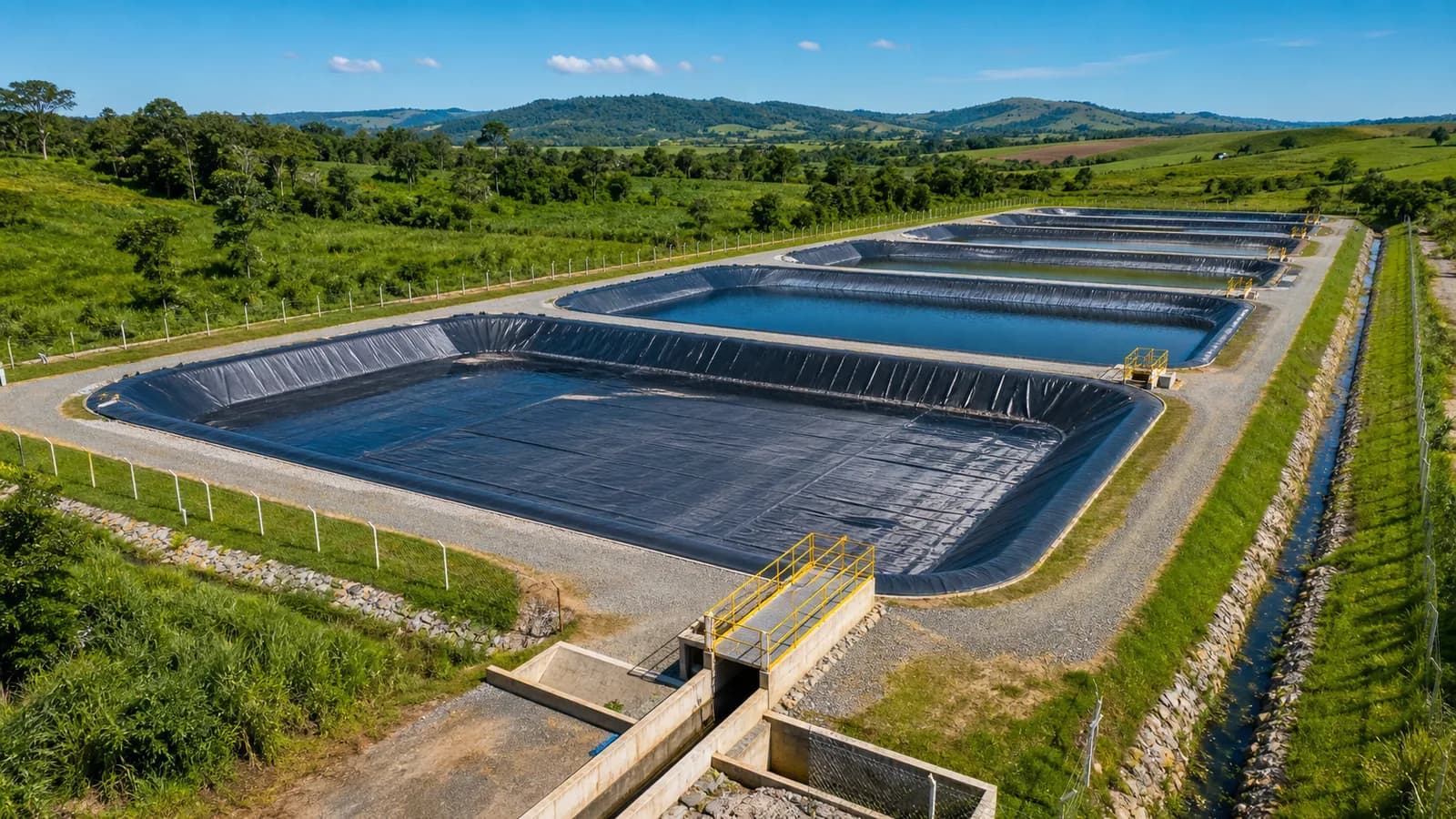
A treatment pond is a reactor within a geotechnical structure. If volume is defined without the load and treatment objective, the process may fail. If the liner is selected without considering soil, drainage, and operation, containment may suffer even with a good material.
Preventing failures begins by connecting these two halves.
The geomembrane does not perform treatment
Flow, organic load, temperature, retention time, and cell configuration guide the process. The geomembrane reduces migration through the bottom and slopes; it does not automatically turn effluent into water suitable for discharge or reuse.
The outlet must meet the objective, monitoring requirements, and permit. When discharge occurs in Brazil, CONAMA Resolutions 357/2005 and 430/2011 are part of the assessment of the effluent and receiving water body.
Four kinds of “drainage” that must not be confused
1. Clean water around the pond
Channels and grades divert rain, protect embankments, and prevent untreated clean water from occupying treatment volume.
2. Water and gas under the geomembrane
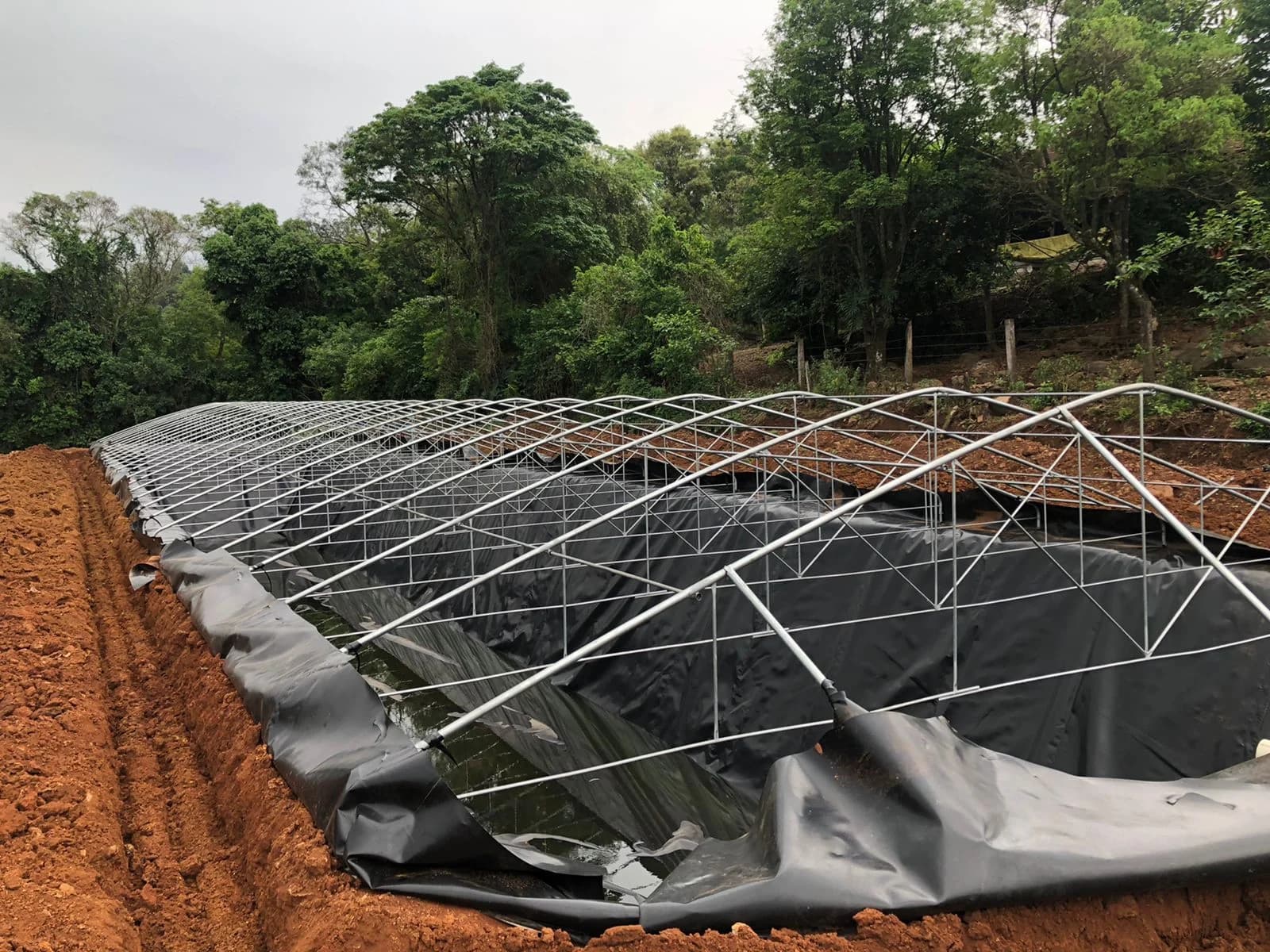
Groundwater, lateral seepage, organic soil, or site history may create pressure under the sheet. Drainage and venting need a path and outlet; in higher-risk situations, they may form part of a detection system.
3. Inlet, outlet, and flow between cells
Pipes and structures distribute the effluent. Hydraulic short-circuiting reduces the volume effectively used and may compromise performance.
4. Operational withdrawal
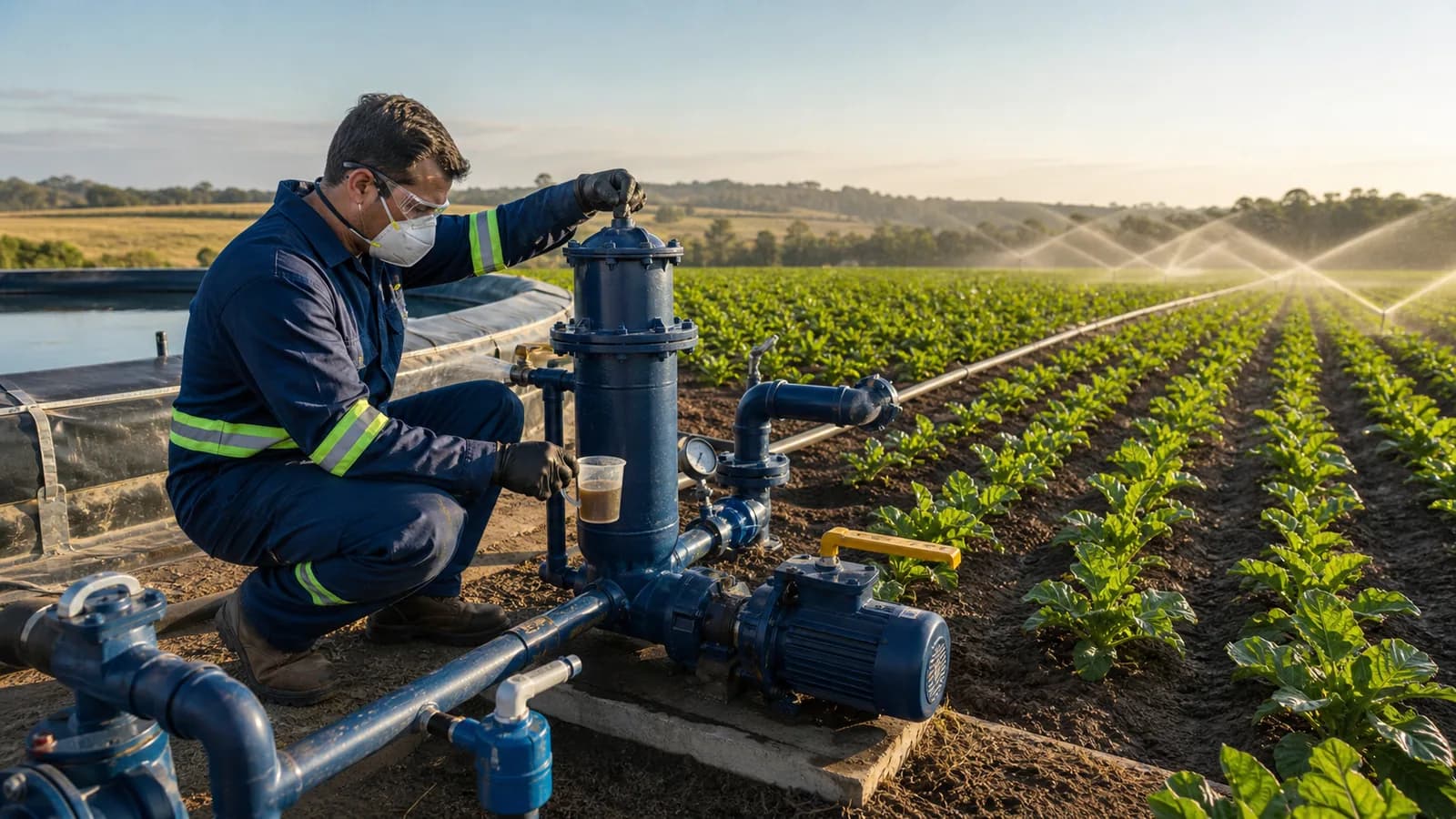
Pumps, access, and sludge management must function without puncturing or overloading the barrier.
Where failures often begin
- subgrade with stones, voids, or soft areas;
- lower drainage without an outlet;
- pipe or concrete details improvised in the field;
- incompatible anchoring and slope;
- equipment access without protection;
- level above the operating condition;
- erosion, animals, or deep-rooted vegetation;
- accumulated sludge and loss of useful volume;
- lack of inspection and records.
The guides to ground preparation and weld quality control examine two of these stages in greater depth.
Signs that require investigation
Observe level and freeboard, erosion, deformation, bubbles under the liner, unusual odor, color changes, scum, foam, algae, pumps or valves outside normal condition, and loss of efficiency shown by analyses.
A single sign does not establish a diagnosis. Odor, for example, may reflect a load or process change, while a falling level may originate in the piping. Historical records help distinguish an isolated event from a trend.
Minimum operating routine
- record flow, rain, level, and events;
- inspect embankments, fencing, and drainage;
- check inlets, outlets, pumps, and valves;
- monitor sludge and useful capacity;
- observe the integrity of accessible geomembrane;
- perform analyses required by the permit and objective;
- maintain a plan for rain, equipment failure, overflow, and leakage.
In Santa Catarina, ponds linked to swine farming must comply with IMA/SC Instruction 11 and current permitting. This state rule does not replace requirements in other locations.
LJS can integrate water and effluent treatment, lining, and drainage into the operating scope of the structure, without reducing the decision to the area of liner.
Technical references
- Embrapa — storage in manure basins and treatment in ponds
- IMA/SC — Normative Instruction 11
- CONAMA — Resolution 430/2011
- U.S. EPA — Lagoon Wastewater Treatment Systems
- USDA-NRCS — Waste Treatment Lagoon, CPS 359
International references support technical reasoning but do not replace design, permits, standards, and professional responsibility applicable in Brazil.