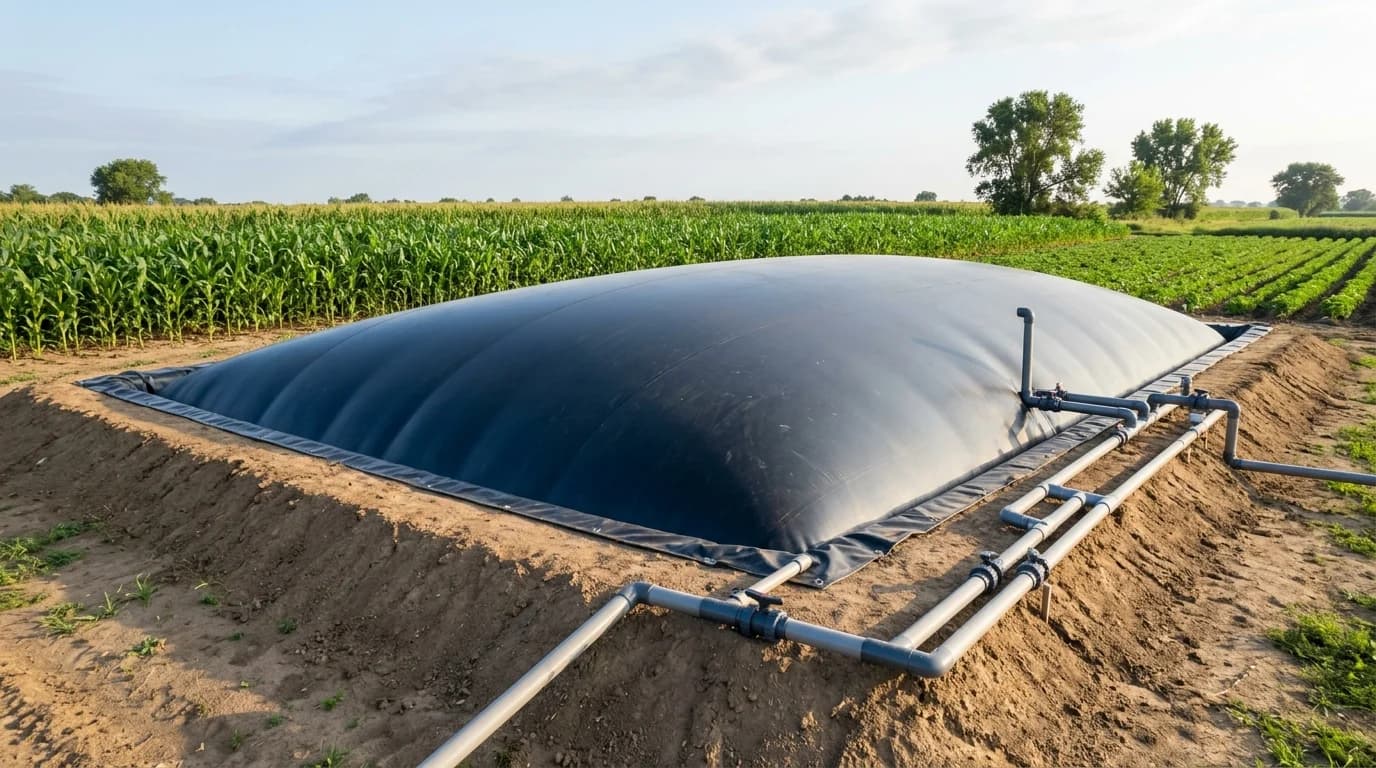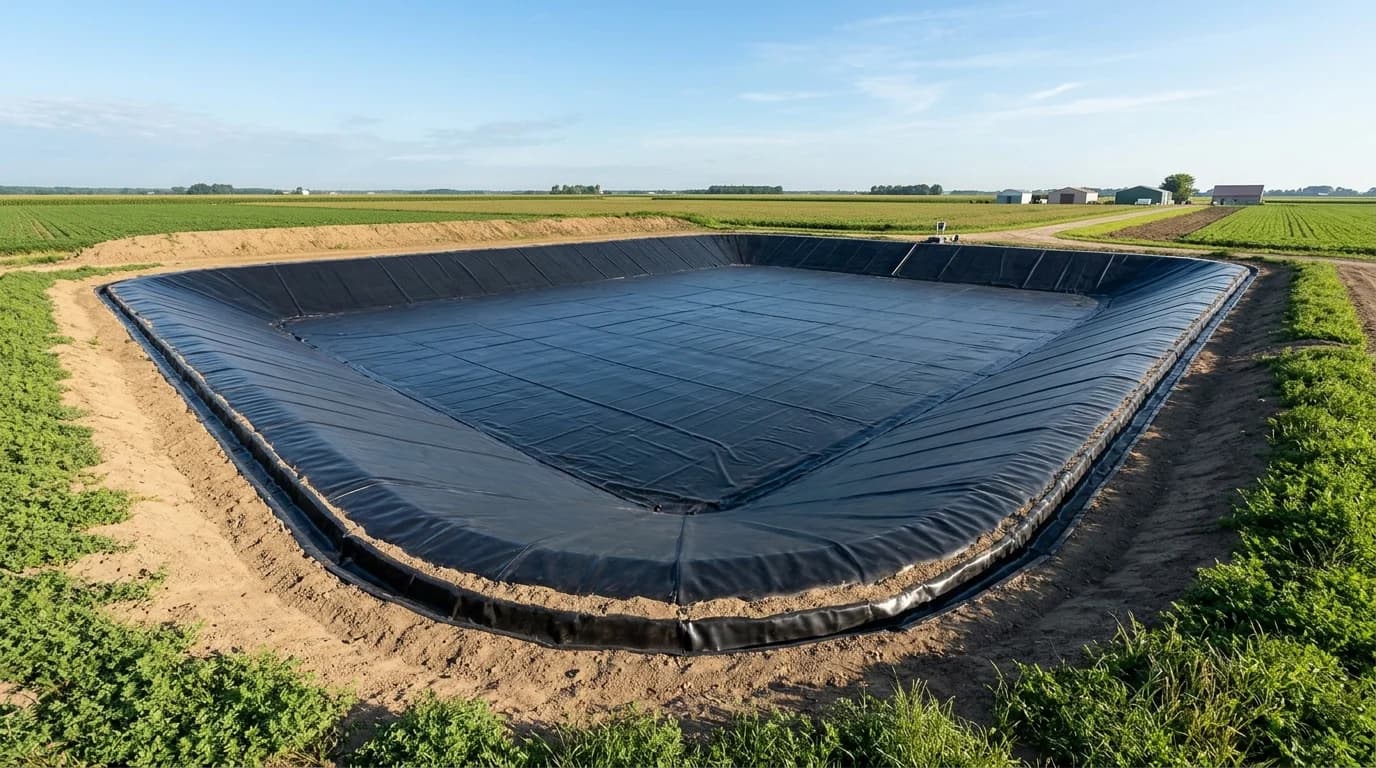
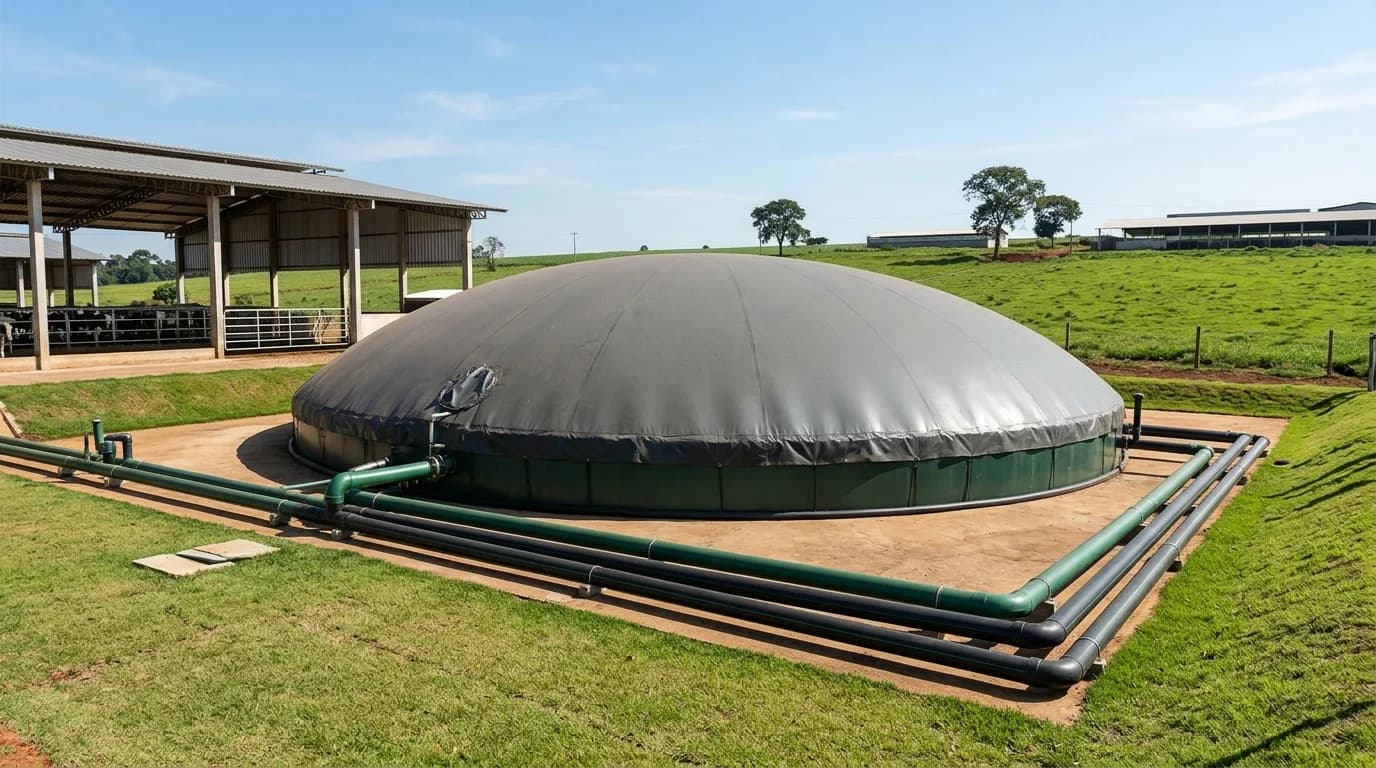
A biodigester is an enclosed, impermeable chamber designed to promote the anaerobic decomposition (in the absence of oxygen) of organic matter. In agricultural and agro-industrial practice, it is neither a simple effluent pit nor a magical source of immediate energy: it is a continuous biological reactor that transforms concentrated environmental liabilities into useful, manageable resources.
Accurately understanding what the system is used for prevents overdesigned investments or frustration regarding gas yield and final effluent quality.
The threefold purpose of a biodigester
The technical application of a biodigester addresses three integrated operational areas:
1. Treatment and stabilization of environmental liabilities
The primary sanitary function of a biodigester is to reduce the polluting load of feces, urine, and facility wash water (such as swine barns, dairy cattle facilities, or slaughterhouses). Through the action of anaerobic bacterial colonies, complex compounds are broken down, resulting in:
- A significant reduction in Chemical Oxygen Demand (COD) and Biochemical Oxygen Demand (BOD);
- Mitigation of foul odors and reduced attraction of disease vectors (such as flies);
- Partial inactivation of pathogenic organisms and weed seeds due to hydraulic retention time and environmental conditions within the reactor.
2. Biogas generation and utilization
Anaerobic digestion produces a gas mixture composed primarily of methane ($CH_4$) and carbon dioxide ($CO_2$), along with traces of water vapor and hydrogen sulfide ($H_2S$). The biogas accumulated beneath the geomembrane cover serves as an energy carrier for:
- Direct combustion in burners for thermal heating of facilities (such as animal nurseries and farrowing houses);
- Fueling engine-generator sets for rural electricity generation or grid net metering;
- Replacing fossil fuels in industrial processes and drying systems.
To understand how to calculate the expected volume of this production based on solids content, see the article on how much biogas a biodigester produces.
3. Digestate production (liquid biofertilizer)
The stabilized material that continuously exits the biodigester after the retention cycle is digestate. Unlike raw manure, digestate contains nutrients (notably nitrogen, phosphorus, and potassium) that are more mineralized and readily available for plant uptake. It is used for nutrient recycling through the fertilization of pastures and crops.
Application rates must be dosed according to agronomic analyses of the soil and the liquid fraction, a topic detailed in the guide on what to assess in effluent fertigation.
What a biodigester cannot do: aligning expectations
Design errors frequently occur when operational capabilities that a biodigester cannot handle alone are attributed to it:
- It does not serve as indiscriminate disposal for carcasses or plastics: digestion depends on microbiological balance; recalcitrant materials or manure containing excessive antibiotics and disinfectants inhibit methanogenic bacteria.
- It does not replace water management: excess rainwater collected from barn roofs or leaking water troughs dilutes the biomass and reduces retention time, impairing the process. The biodigester must receive waste with a consistent solids content.
- It does not make effluent potable: treated digestate must not be discharged into water bodies without tertiary polishing or compliance with applicable discharge standards.
Fundamental components for proper operation
For the system to deliver its three functions safely, reactor engineering demands strict structural integration:
- Bottom lining and slopes: continuous lining with thermally welded high-density polyethylene (HDPE) geomembranes, preventing effluent seepage into the water table.
- Airtight cover (gas holder): flexible geomembrane cover anchored in perimeter trenches for controlled retention and pressurization of biogas.
- Drainage and removal systems: inlet boxes with grit chambers, gravity or pumped inlet and outlet piping, condensate drainage along the gas line, and safety flares.
Before determining capacity or purchasing materials, it is essential to consolidate the characterization of the biomass generated in the property's daily routine, according to the guidelines in the guide on data to assess before designing a rural biodigester.
Technical decision summary
Adopting a biodigester is the recommended choice when an operation generates a continuous stream of concentrated organic waste, needs to remediate sanitary liabilities, and has a demand for heat, power, or controlled organic fertilization. Project feasibility stems from a precise balance between waste volume, hydraulic retention time, and operational control of the biological system.