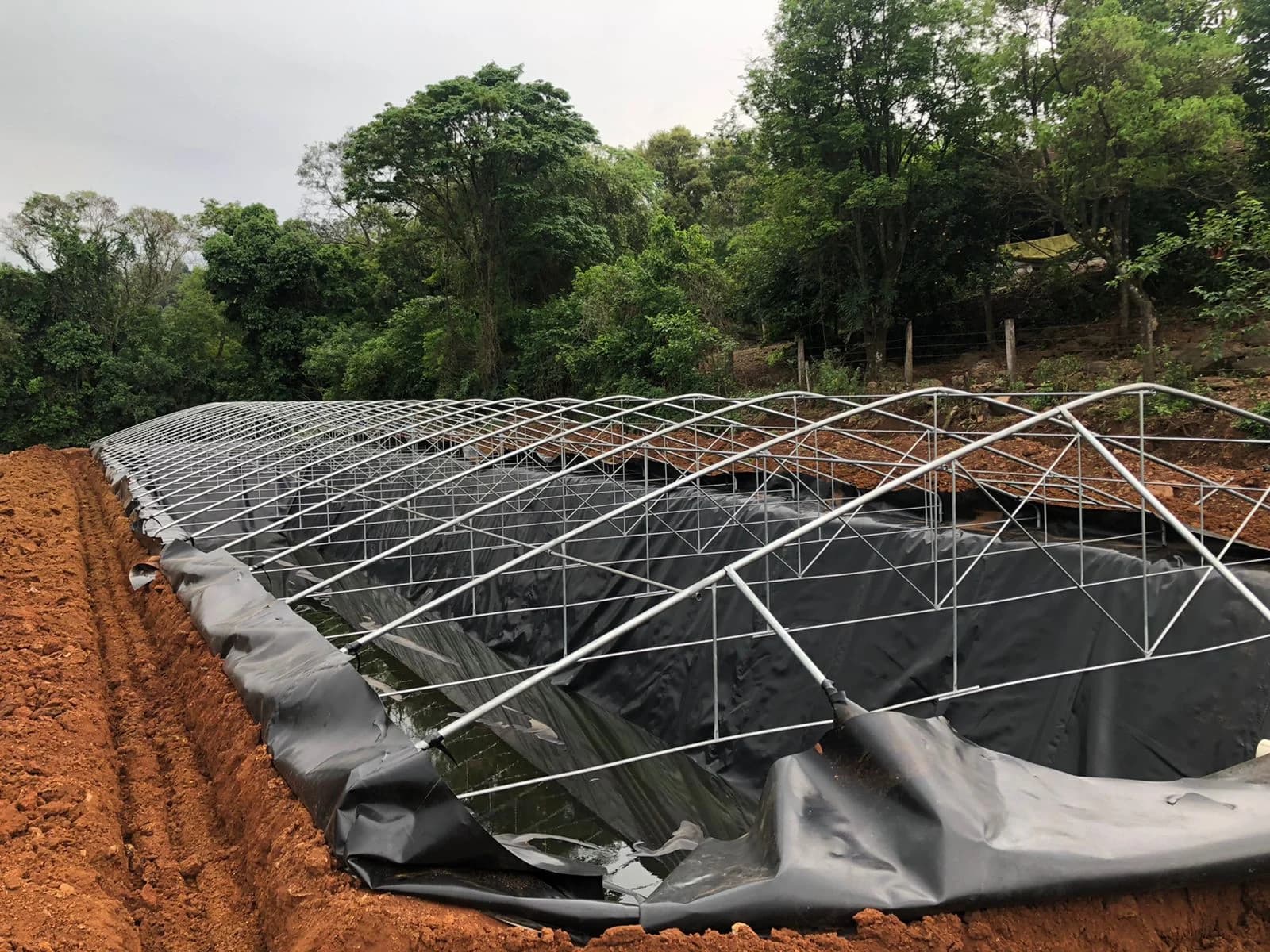
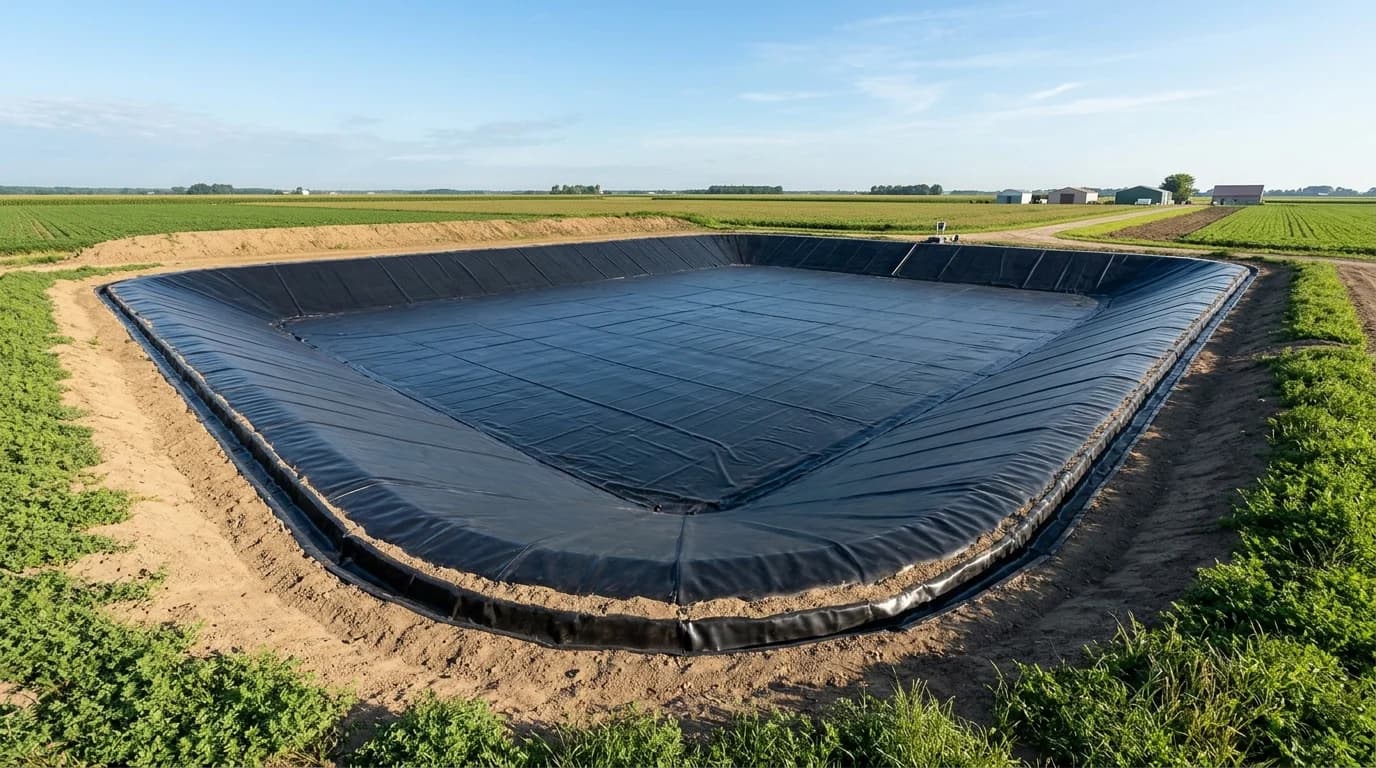
Choosing an excavated cistern lined with a geomembrane has become a common alternative for storing large volumes of water on rural properties, in agro-industries, and across operational projects. Unlike prefabricated reservoirs or cylindrical tanks with rigid commercial capacity limits, an excavated structure allows sizing the volume according to site availability and the facility's water balance.
However, storage efficiency does not simply depend on digging a pit and rolling out a plastic liner. It is a geotechnical project in which the geomembrane functions as a waterproofing element within an integrated system composed of supporting subgrade soil, bottom drainage, anchor trenches, hydraulic connections, and a cover system.
Why a geomembrane cistern differs from open reservoirs
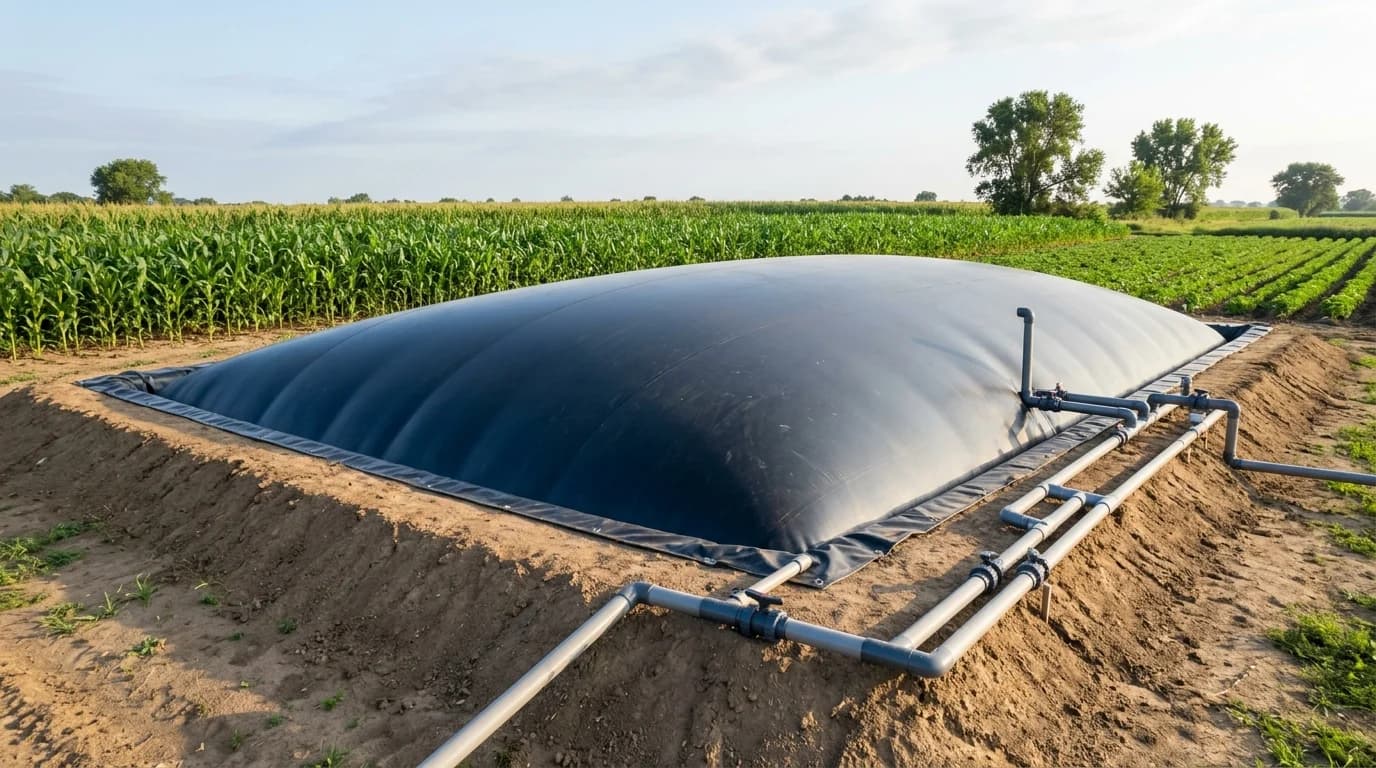
The primary operational distinction between a cistern and an open-air irrigation pond is the cover and the control of environmental exchange. While conventional open ponds remain vulnerable to accelerated evaporation, algae blooms driven by solar radiation, and the continuous entry of leaves and windblown dust, a cistern utilizes a surface cover—often also fabricated with a flexible geomembrane—to safeguard the quality of the stored water.
In livestock applications, such as swine and poultry farming, biosecurity against pathogens and the reduction of evaporation are critical to the daily operation's stability. The top cover also prevents the breeding of insect vectors and external contamination from animal waste carried by surface runoff.
Critical components of the containment system
For a cistern to reach its expected service life without invisible water losses, each physical interface must be designed and executed in accordance with local mechanical stresses:
1. Subgrade leveling and geotextile protection
The contact between the polyethylene liner and the ground requires meticulous earthwork finishing. Sharp roots, loose stones, and ground irregularities generate stress concentration points once the cistern reaches its full hydrostatic load. In soils containing gravel or pebbles that cannot be thoroughly cleared, installing a non-woven geotextile layer serves as a protective cushion, absorbing deformations and mitigating the risk of localized puncture.
Before greenlighting installation, field inspection must verify uniform bottom compaction and smooth transitions between the floor and side slopes, eliminating sharp right angles that could overstress the liner.
2. Polymer selection: HDPE and LLDPE
For the lined base, high-density polyethylene (HDPE) geomembrane is commonly specified due to its high mechanical strength and chemical resistance against compounds present in the soil. For the flexible cover, however, where movements are induced by fluctuating water levels and continuous wind action, linear low-density polyethylene (LLDPE) may be favored because of its superior flexibility and ability to accommodate folding and cyclical deformations.
To understand the mechanical considerations that dictate sheet thickness in each application, review the geotechnical risk variables in how to choose HDPE geomembrane thickness.
3. Anchor trench and slope stresses
Perimeter anchoring along the cistern perimeter is executed in trenches excavated parallel to the slope crest. The depth and width of this trench, along with the compacted backfilling procedure, must balance the tensile stresses exerted by the liner's self-weight on the slope, thermal expansion/contraction cycles, and hydrostatic thrust when filled.
Execution errors during trench backfill compaction cause liner slippage along the crest, pulling the material on the slope and generating structural wrinkles that promote premature shear failure of welded seams.
Welding, transitions, and non-destructive field testing
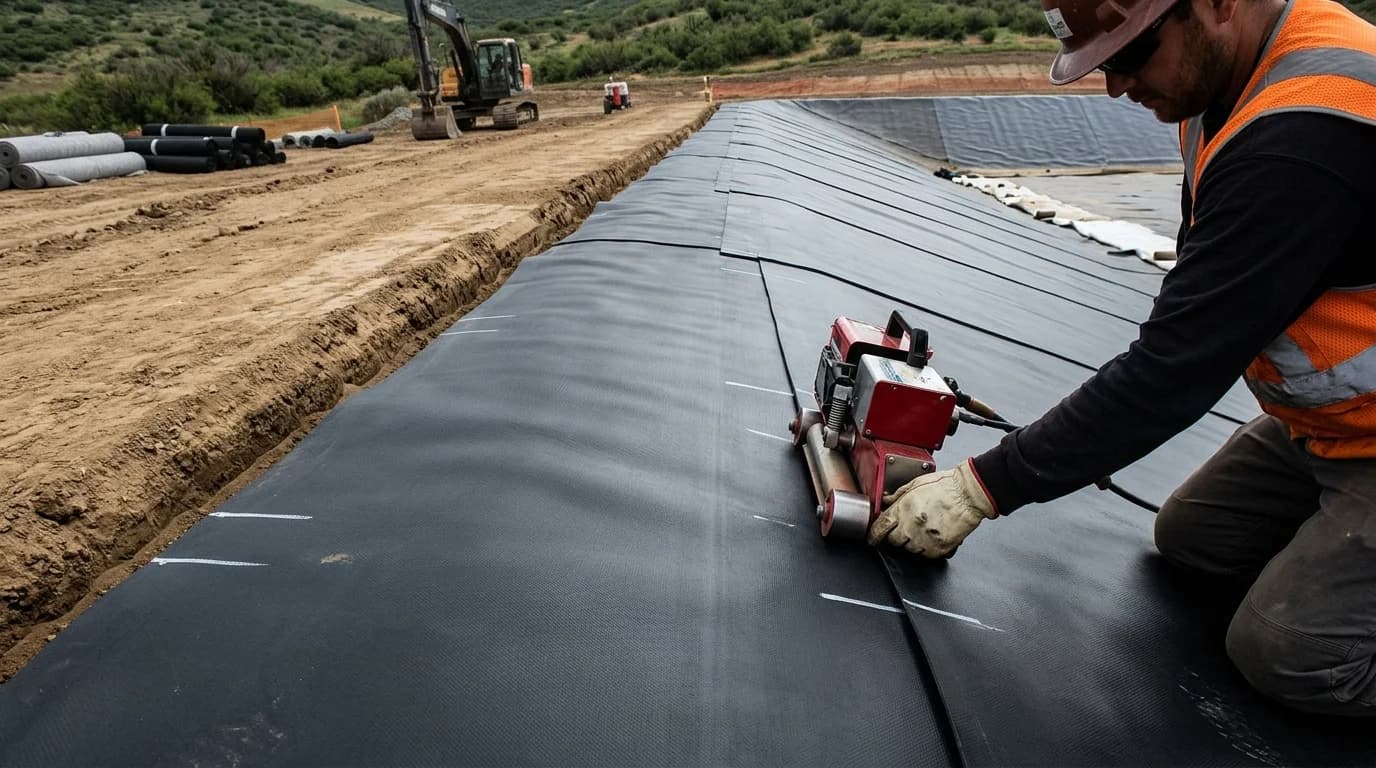
The cistern's leak tightness depends directly on the quality of field seaming. Broadly, two methods comprise the installation:
- Dual-track hot wedge fusion welding: used on continuous floor and slope panels. It creates an internal air channel between two parallel weld beads for testing.
- Extrusion welding: used for detailing, pipe boots on inlet/outlet lines, bottom sumps, and localized repairs.
No installation should be approved for filling based solely on visual inspection of the panels. The air channel of dual-track seams must be pressurized to verify leak tightness along the entire seam length, following the procedures detailed in geomembrane weld quality control. For pipe penetrations and structural plastic transitions using extrusion welds, a spark test or vacuum box test detects potential porosity and fusion voids.
Hydraulic sizing and operational precautions
The reservoir footprint and depth should reflect a balanced calculation between daily operational demand and regional rainfall records, as detailed in the guide on how to size a rainwater harvesting cistern.
Beyond volumetric calculations, the project must incorporate features to protect the mechanical and sanitary integrity of the water during routine operation:
- First-flush diversion: dust and debris accumulated on the catchment surface (roofs or yards) must be diverted before reaching the cistern floor.
- Pressure relief and air vents: if the cover is airtight, the system requires calibrated air vents fitted with insect screens to equalize barometric pressure changes during rapid filling or pump evacuation.
- Sloped floor for clean suction: pump intake points should not sit directly on the floor elevation, preventing sediment resuspension and safeguarding the liner from mechanical abrasion caused by pump suction.
Routine maintenance and preventive sanitary measures can be explored further in the operational guidelines on how to keep cistern water clean.
Integration into the executive design
The durability of a lined cistern does not stem from a single miraculous material, but rather from engineering discipline across every stage: earthwork design, correct polymer specification, qualified thermal welding crews, and documented field quality assurance. Treating the reservoir as an engineered geotechnical system prevents costly dewatering for repairs and ensures the water security necessary for continuous operations.